Gergő Gógl The puzzle of protein interactions
Inserm researcher, head of the “Quantitative Interactomics and Disease-Related Networks” group at the Institut de Biologie Valrose, Nice
- 2025 • Impulscience
Within the cell, proteins interact physically with each other to perform a wide variety of functions. Gergő Gógl seeks to better understand the protein interaction network, a particularly dynamic network that evolves according to the state of the cell. He is particularly interested in transient interactions which, although difficult to detect, play a crucial role in regulating protein activity and coordinating cellular processes.
Small motifs, big effects: protein interactions
Proteins are molecules with a specific structure and function in the cell, determined by their chemical composition and physical interactions with other proteins. The vast majority of these interactions are mediated by what are known as “short linear interaction motifs”.
These motifs, consisting of 5 to 10 of protein building blocks (amino acids), are found in the so-called “disordered” regions of proteins, i.e. regions that lack a stable structure. The distinctive feature of these motifs is that they mediate transient interactions between proteins. Their sequence is highly conserved throughout evolution, and mutations in these motifs are often associated with diseases, highlighting their biological importance.
-
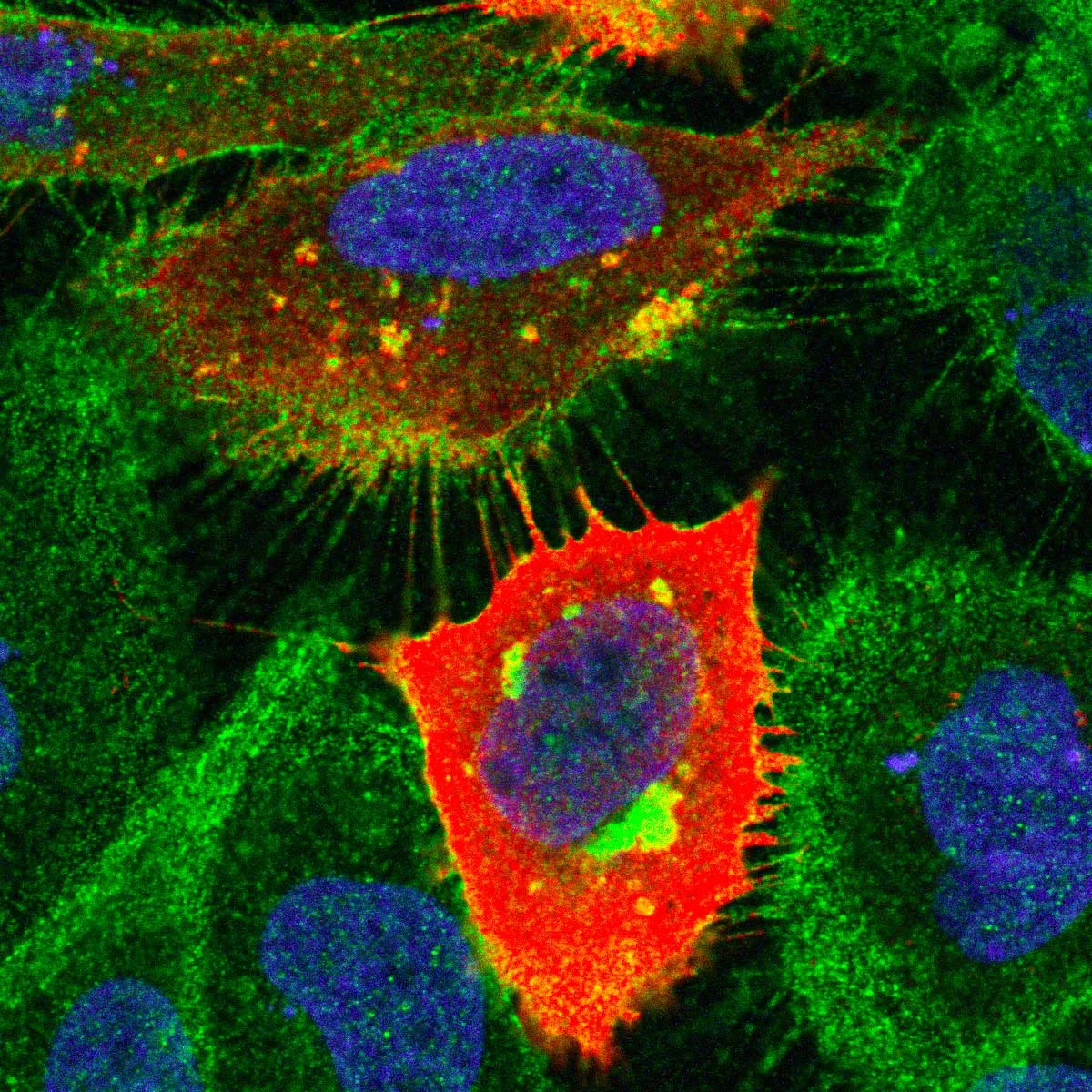 See the gallery
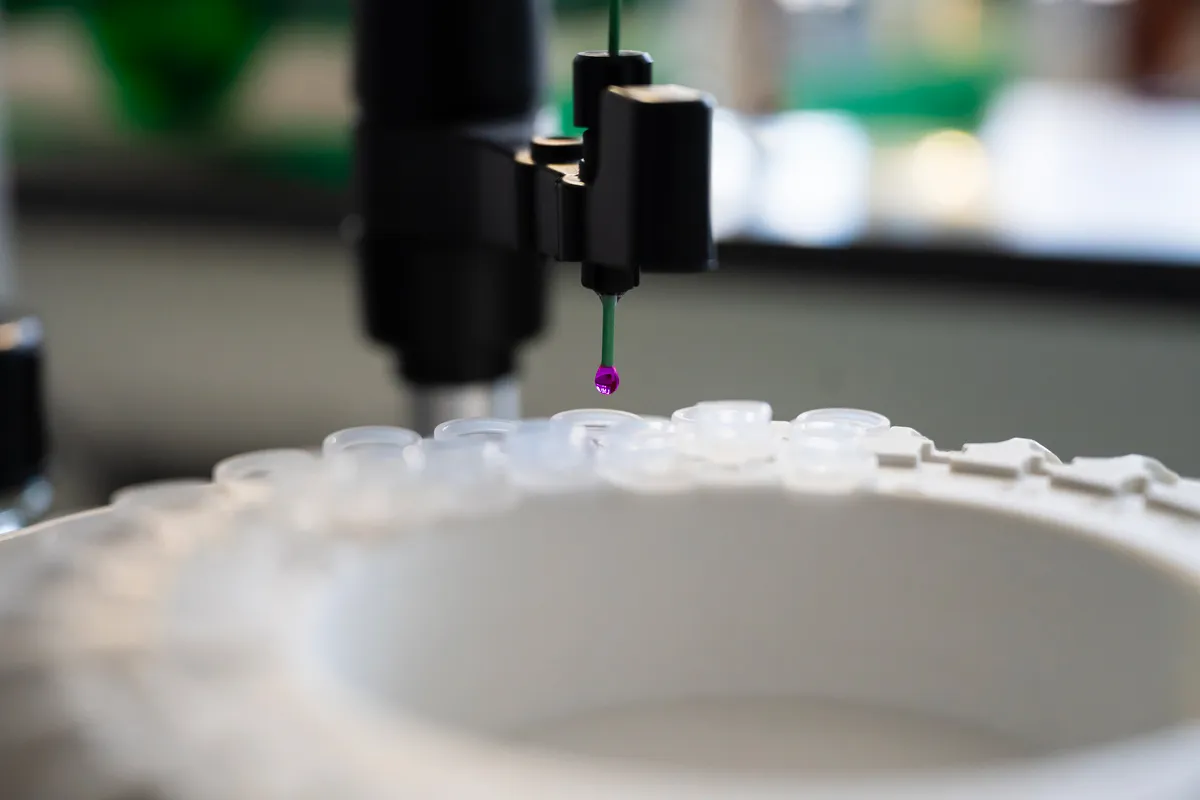
© Gergő Gógl lab / Institut de Biologie Valrose -
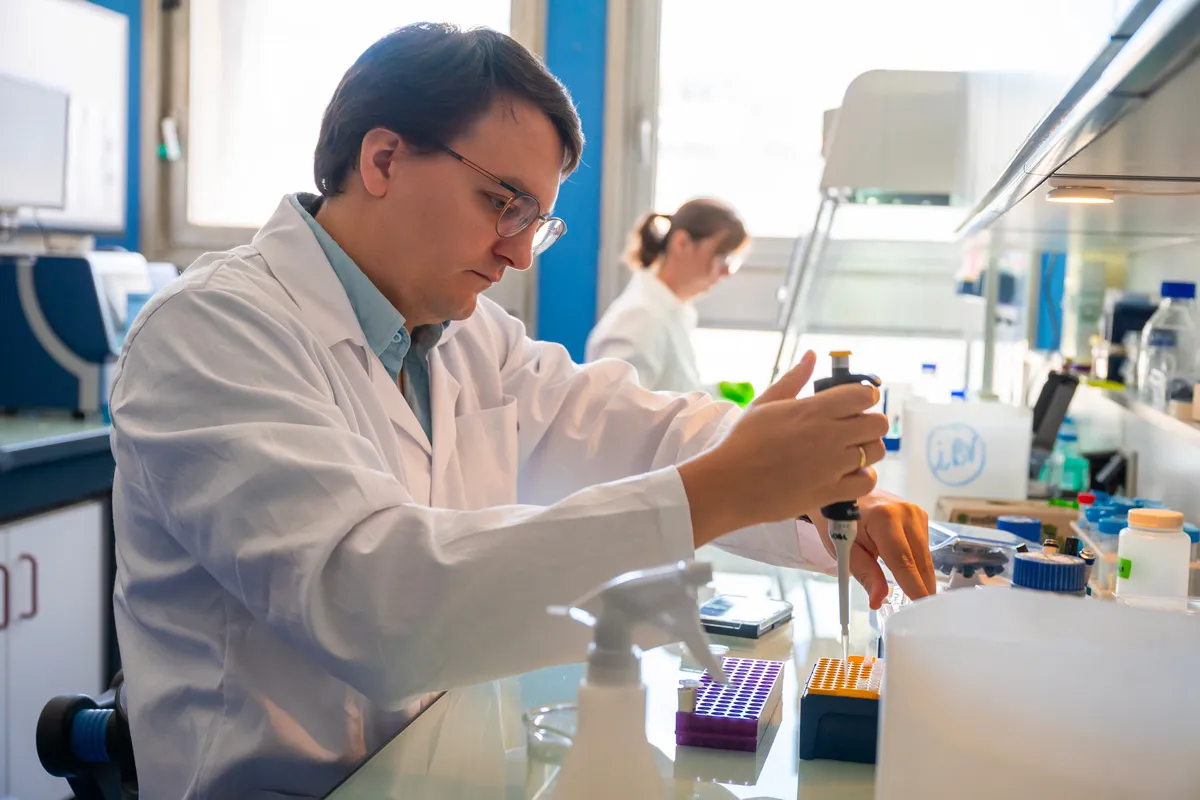 See the gallery
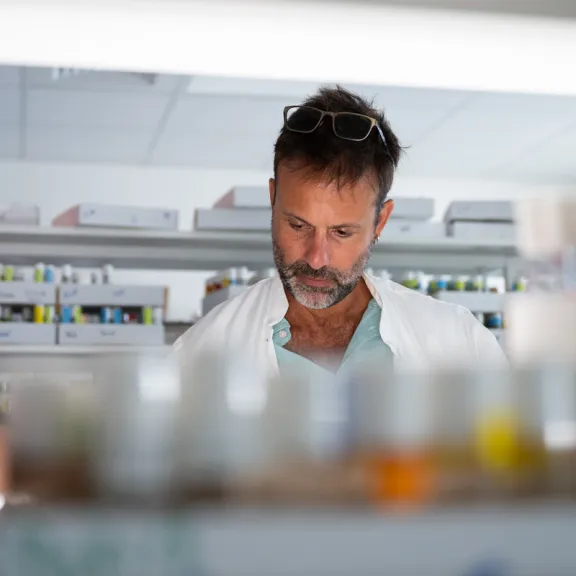
Gergő Gógl in his laboratory at the Institut de Biologie Valrose (Nice).
© Alexandre Darmon / Art in Research -
 See the gallery
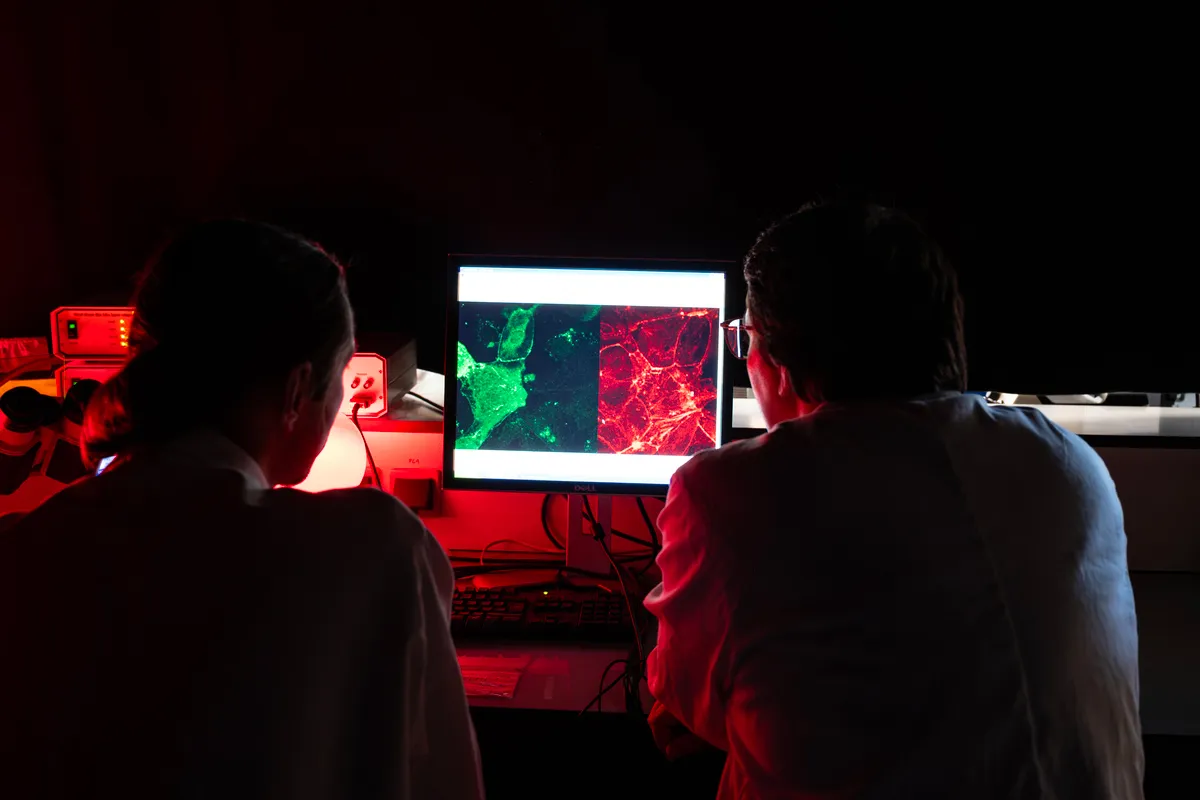
Gergő Gógl's laboratory at the Institut de Biologie Valrose (Nice).
© Alexandre Darmon / Art in Research -
 See the gallery
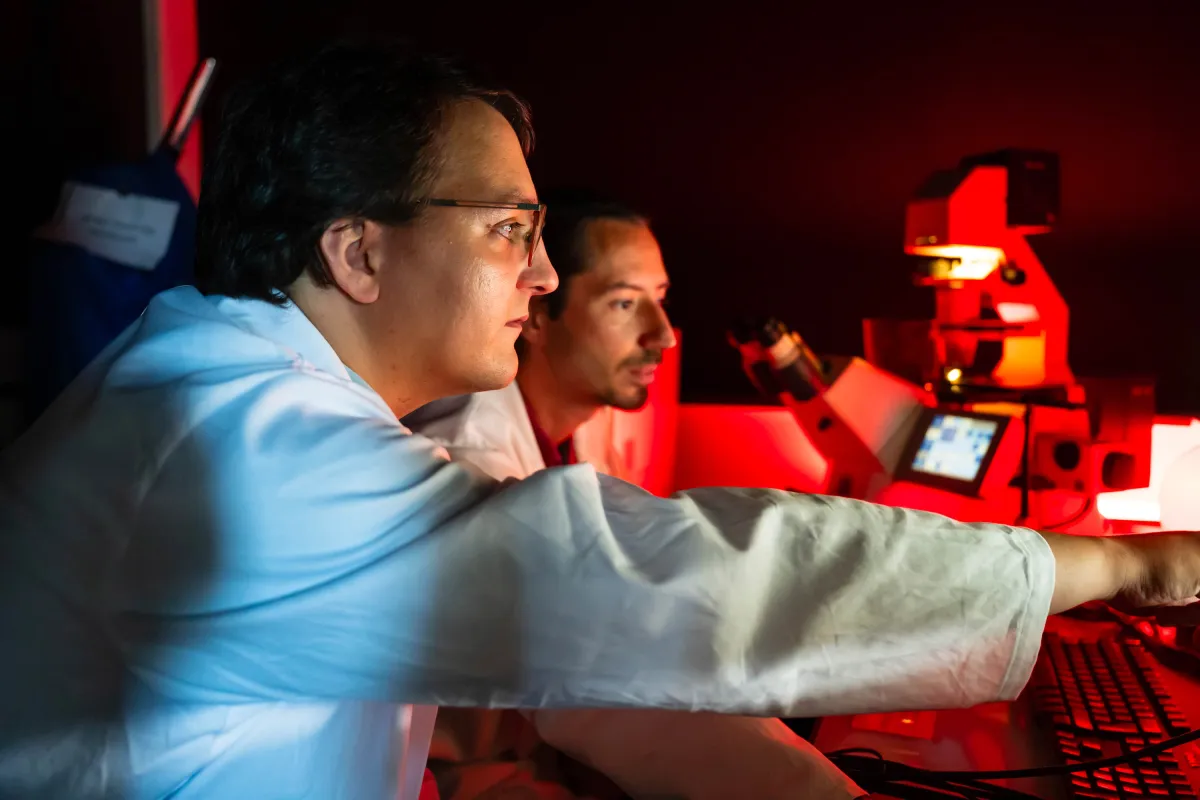
Gergő Gógl's laboratory at the Institut de Biologie Valrose (Nice).
© Alexandre Darmon / Art in Research -
 See the gallery
Gergő Gógl in his laboratory at the Institut de Biologie Valrose (Nice).
© Alexandre Darmon / Art in Research
Tackling the study of orphan protein motifs
The number and sequence of these binding motifs have been predicted using various computational approaches. However, to date, few of them have known partners or a clearly established role in the cell, making them “orphan” motifs. Indeed, the brevity of their interactions makes them particularly difficult to study.
Gergő Gógl has developed an innovative method, called nHU, which makes it possible to study the interactions of these orphan motifs, even the most fleeting ones. Unlike other methods, this approach is capable of measuring tens of thousands of interactions mediated by orphan motifs with great sensitivity and precision. It can also be applied to whole proteins under conditions similar to those observed in the cell. Everything needed to study orphan motifs!
Deciphering large-scale protein interactions: the ambition of the Impulscience project
With the support of Impulscience, Gergő Gógl and his team will use the nHU method to identify the partners of orphan motifs, validate that these interactions occur between native proteins, and determine under what conditions they take place in the cell. They will also analyse the impact of mutations on these motifs, which are associated with many diseases including cancer, on cellular functions.
Overall, this project will adopt a revolutionary quantitative and biophysical approach capable of answering questions that have remained unanswered for years: what are the partners of these orphan motifs, which are so essential from a biological point of view, and how can we study the mechanisms they orchestrate?
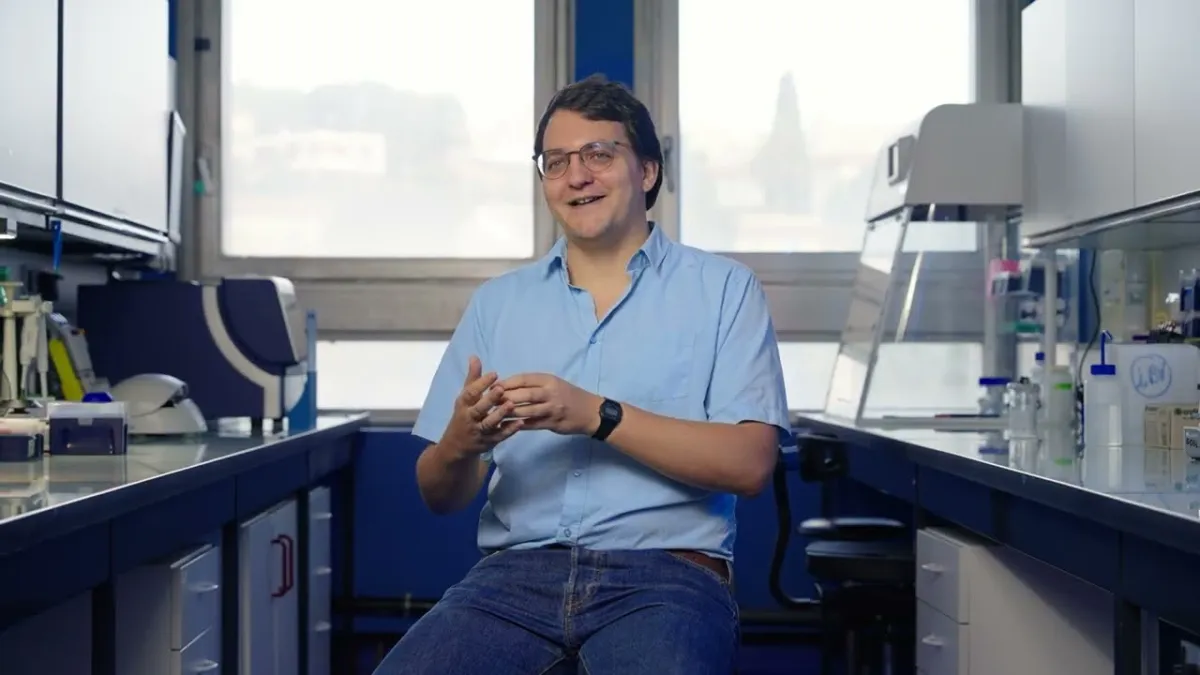
Gergő Gógl in a few words
A biochemist by training, Gergő Gógl began his career in Hungary at Eotvos Lorand University, where he completed his doctoral thesis in structural biology. During his research, he detailed the molecular interactions that enable the activation of proteins involved in signal communication between cells and their environment. He joined the Institut de génétique et de biologie moléculaire et cellulaire (Illkirch, France) in 2019, where he broadened his field of expertise to include the study of large networks of interactions between proteins, particularly those that form between viral and human proteins. In 2023, he joined Inserm as a research fellow, and in 2024 he established his own team at the Institut de Biologie Valrose in Nice.

Worth reading
Filipe Pinto Teixeira
Camille Berthelot

Raphaël Ceccaldi