Lisa Roux From breath to brain: how breathing shapes our memory
CNRS researcher, head of the team “ Neurophysiology of natural behaviors” at Interdisciplinary Institute for Neuroscience (IINS), Bordeaux. Lisa Roux and her team's website
2026 • Impulscience
2012 • Bettencourt prize for young researchers

Breathing keeps us alive, but it does far more than that. With every breath, our brain synchronises with our breathing rhythm. Lisa Roux and her team are investigating how this rhythm, together with the oxygen supply to the brain, helps consolidate our memories. This project could shed light on the mechanisms underlying memory impairments associated with respiratory disorders.
Breathing: the brain’s conductor
We rarely give our breathing a second thought, yet it constantly sets the tempo of our brain activity. With every inhalation, vast networks of neurons synchronise. This natural 'metronome' is thought to play a key role in coordinating distant brain regions and supporting functions such as perception and memory. But breathing does more than keeping time: it also has a direct effect on oxygen levels in the brain. Determining how breathing can shape the properties of neurons during memory consolidation is the central question of the project supported by Impulscience®.
-
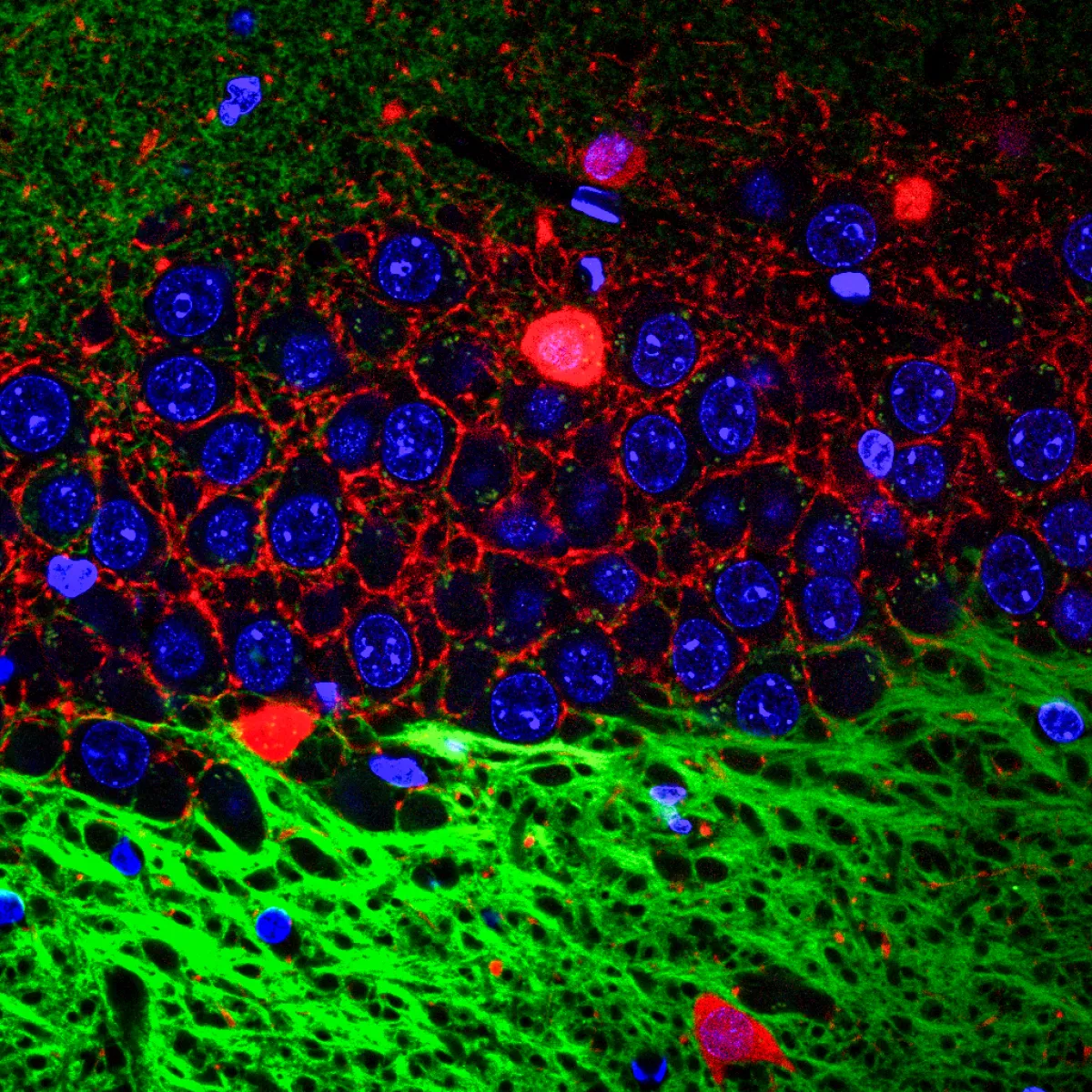
A microscopic image showing different neuronal populations in the hippocampus. Their nuclei are highlighted in blue.
© Equipe de Lisa Roux / CNRS -
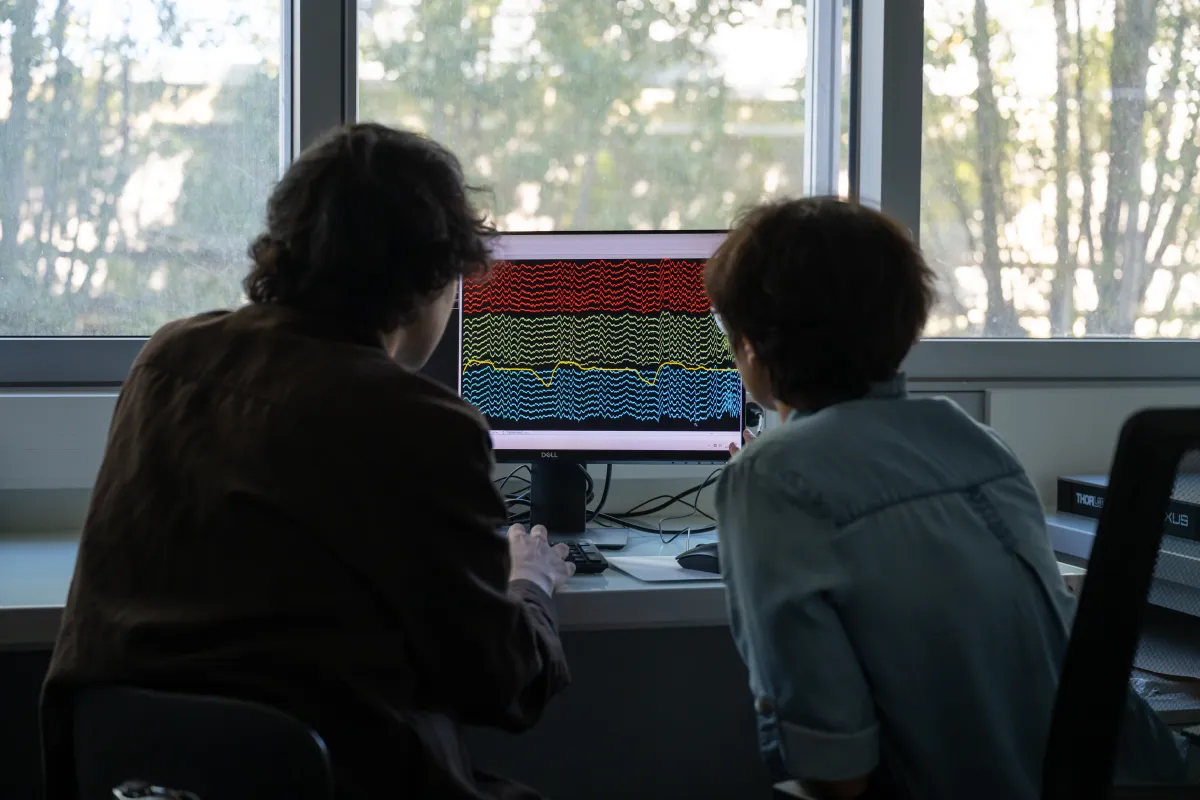
In Lisa Roux’s laboratory.
© Alexandre Darmon / Art In Research -

In Lisa Roux’s laboratory.
© Alexandre Darmon / Art In Research -

Lisa Roux and her team.
© Alexandre Darmon / Art In Research -
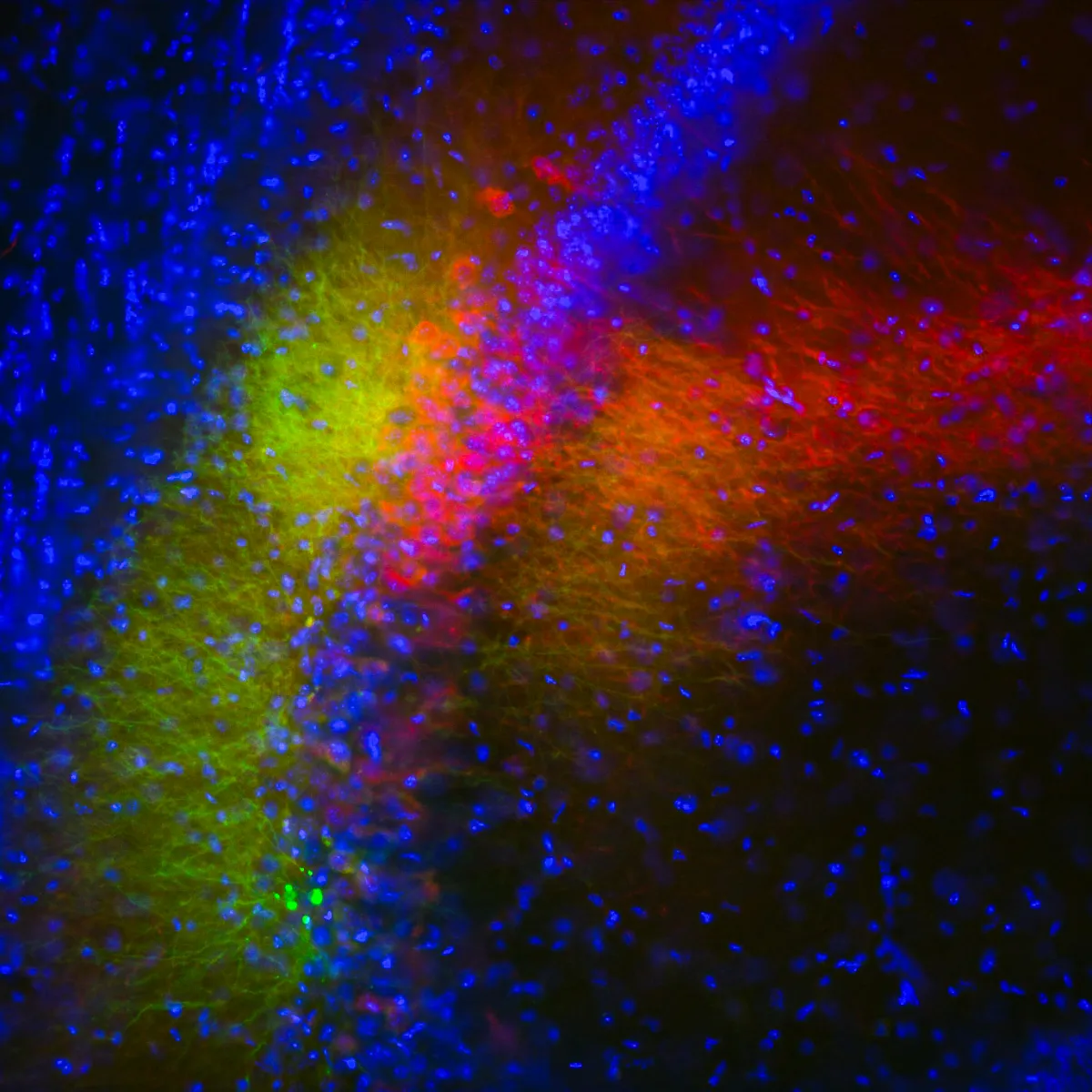
Histological staining targeting a region of the hippocampus in mice (shown in green and red). The cell nuclei are visible in blue.
© Equipe de Lisa Roux / CNRS -
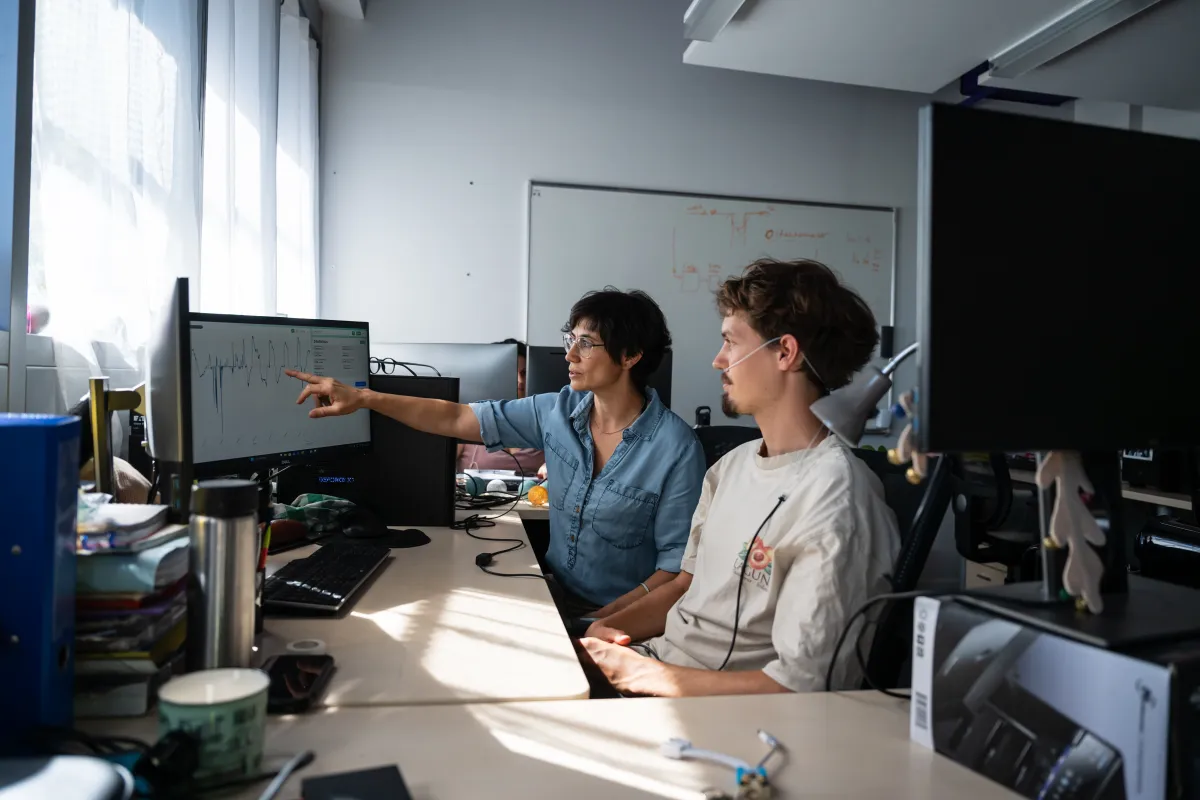
Lisa Roux is analysing the breathing of Tim, a PhD student, to gain a better understanding of the link between respiratory activity and brain function.
© Alexandre Darmon / Art In Research
From breathing to memory consolidation
Lisa Roux and her team study episodic memory: our memory of unique events, anchored in a specific time and place. At the heart of this process lies the hippocampus, a brain region that plays a vital role in forming memories. The team focuses in particular on deep sleep, a crucial phase for memory, when the brain “replays” and consolidates what has been learnt during the day.
With the support of Impulscience, Lisa Roux will explore three key questions:
- How is the brain supplied with oxygen during deep sleep?
- How does oxygen influence the electrical waves in the hippocampus that help memories last?
- How does sleep apnea lead to memory impairment?
Highlight the link between breathing, brain activity and memory
To explore how breathing may create optimal conditions for forming lasting memories, Lisa Roux will combine several cutting-edge techniques in mice: simultaneous recording of dozens of neurons, measurement of brain oxygen levels, and optogenetics, a method that uses light to activate or silence targeted neuronal populations.
Overall, this project aims to uncover the key mechanisms linking breathing to memory, in order to understand and potentially prevent certain cognitive deficits associated with respiratory disorders.
Lisa Roux in a few words
After completing her PhD at the Collège de France and a postdoctoral fellowship at New York University, Lisa Roux joined the CNRS as a researcher in 2018, where she set up her own team at the Interdisciplinary Institute for Neuroscience in Bordeaux. Her research explores the neural mechanisms involved in the formation, consolidation and retrieval of memory, particularly olfactory memory. Her work on olfaction naturally led her to take interest in respiration.

Worth reading

Marie Delattre

Frank Schnorrer

Romain Koszul