Marie Delattre Why do certain species get rid of part of their DNA?
CNRS researcher, head of the "Unconventional modes of DNA maintenance and transmission" team at Laboratoire de Biologie et Modélisation de la Cellule, ENS de Lyon. ENS Lyon website
2026 • Impulscience
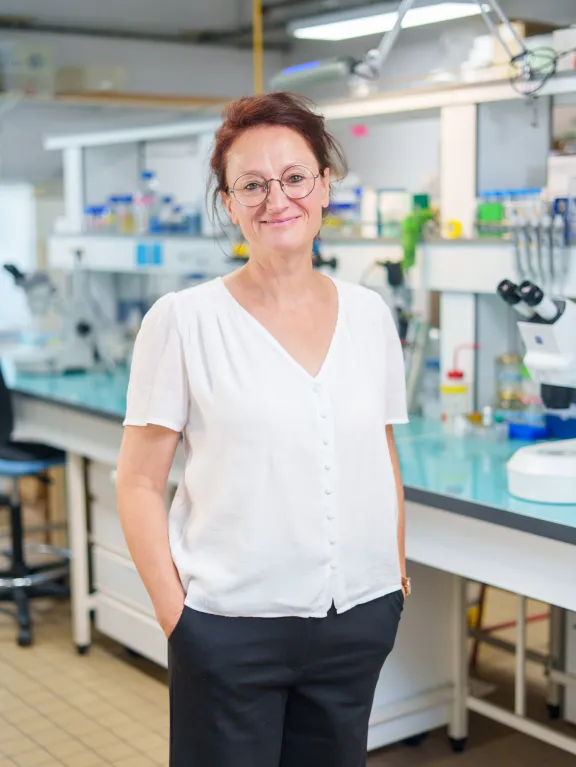
What if losing part of one’s DNA could actually be an advantage? Unlike most organisms, certain species selectively eliminate part of their genome during their development. By studying this remarkable phenomenon in nematodes, Marie Delattre and her team are seeking to understand the mechanisms behind its emergence and maintenance throughout evolution.
Programmed to disappear
If we compared the DNA in our sex cells with that in our liver, skin or brain cells, we would find that it is identical. Surprisingly, however, a few species eliminate parts of their genome from their somatic cells, that is, the cells that are not involved in reproduction. This phenomenon, which is not an accident but a step in the developmental programme, is known as programmed DNA elimination. It occurs in very distantly related species, such as songbirds, nematodes and lampreys.
Remarkably, the same type of sequence is always eliminated, in amounts that vary from one species to another and can reach up to 90% of the genome. Although this mechanism may benefit the organisms concerned, biologists do not yet understand why an organism systematically discards part of its genetic material, especially on such a large scale.
-
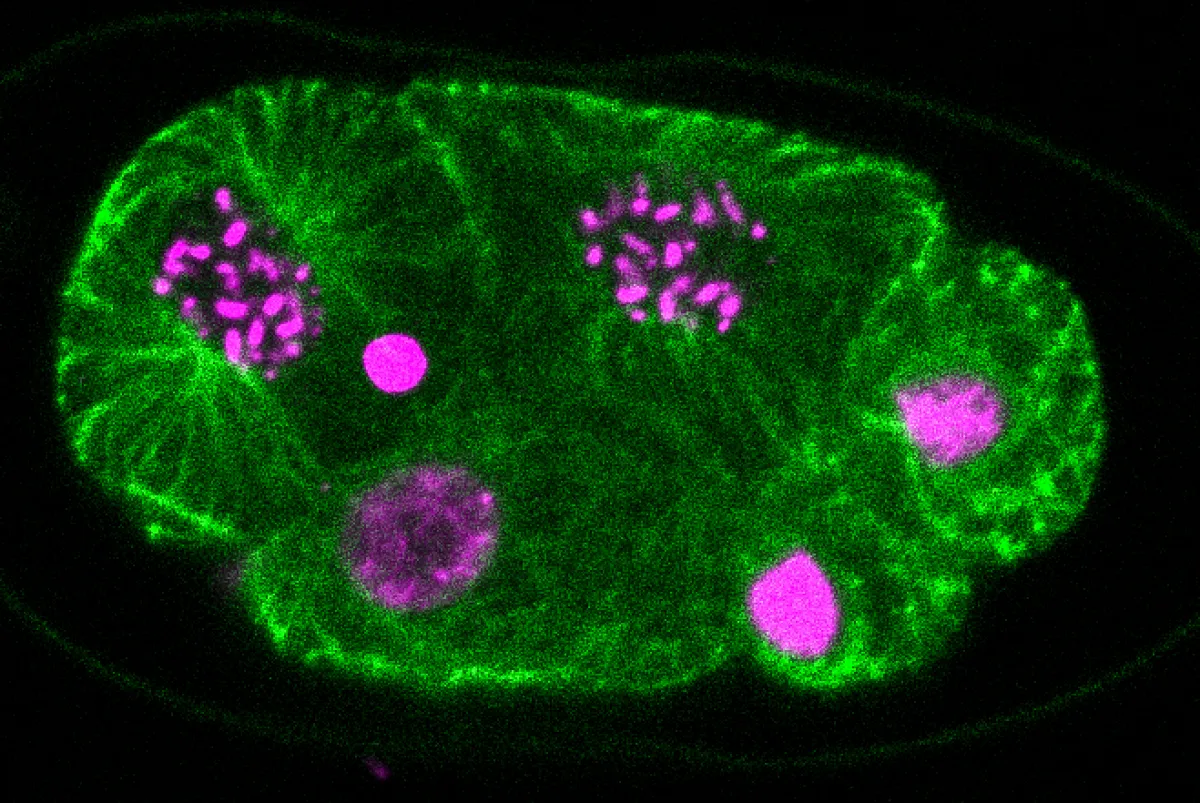
An embryo of the nematode species Mesorahbditis belari, at the 5-cell stage, in the process of excretion. The DNA is labelled in pink and the microtubules (cytoskeleton) in green. In the two largest cells, it can be seen that the chromosomes are being broken down into very small fragments, which is the first stage prior to the excretion of the DNA.
© Equipe de Marie Delattre / Ecole normale supérieure de Lyon -
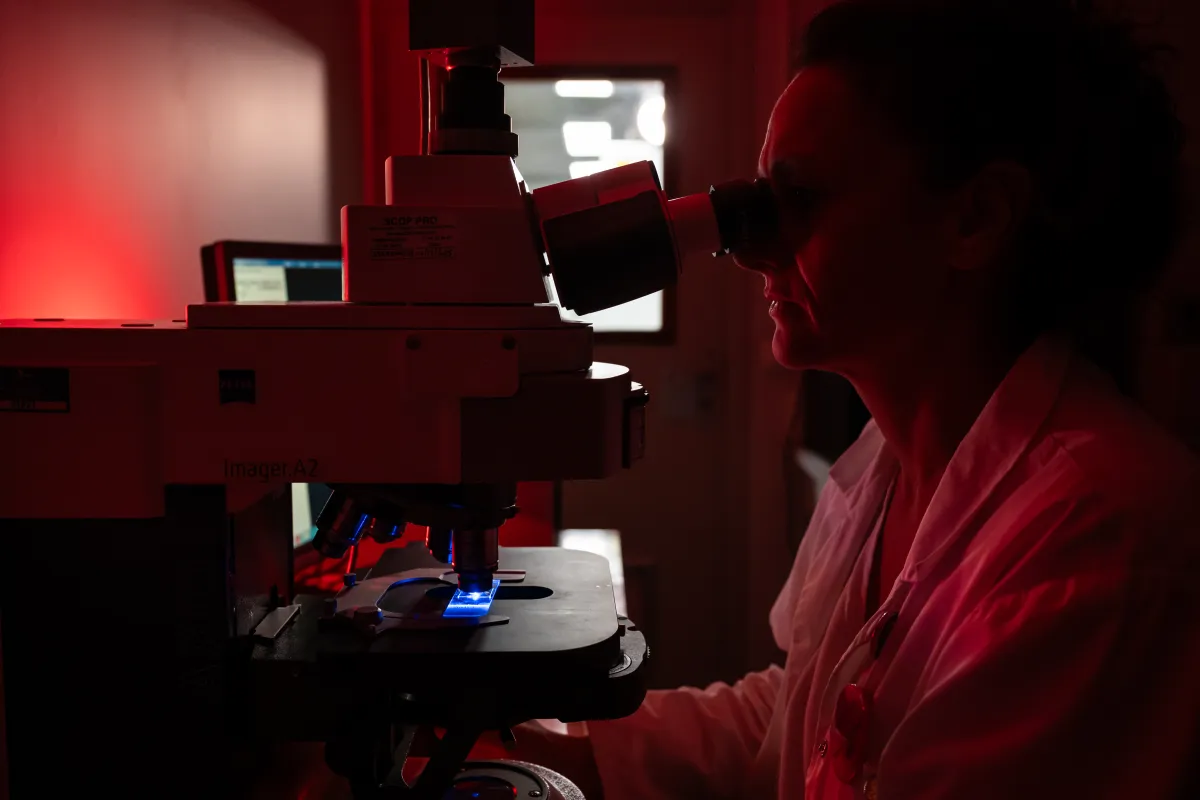
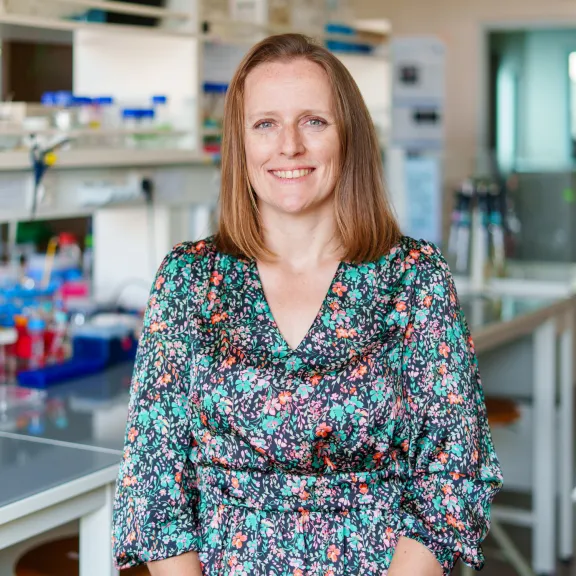
Marie Delattre in her laboratory.
© Alexandre Darmon / Art In Research -
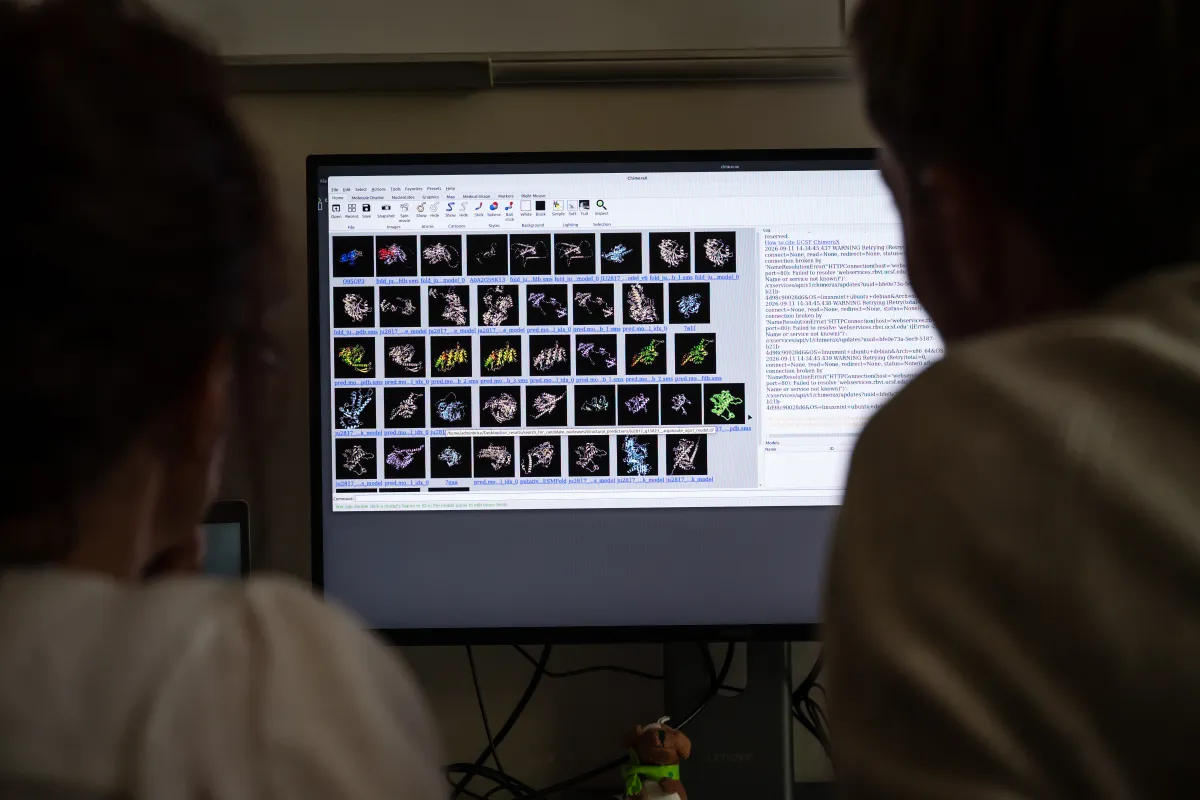
In Marie Delattre’s laboratory.
© Alexandre Darmon / Art In Research -
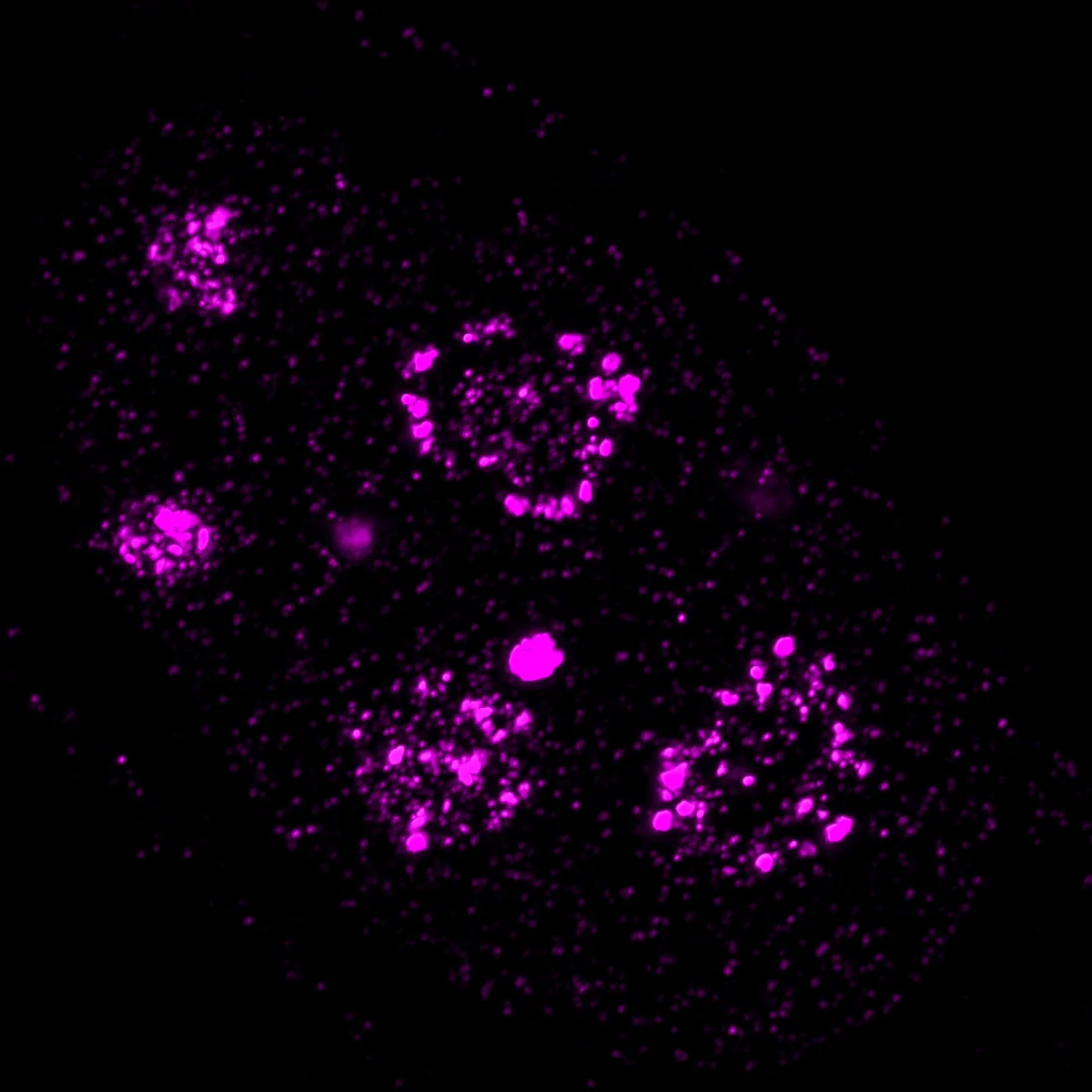
An embryo of the nematode species Mesorhabditis belari at the 5-cell stage, in the process of excretion. The pink staining corresponds to a specific chromatin marker. In the two largest cells, it can be seen that some of the chromosome fragments are located at the periphery and form a halo.
© Equipe de Marie Delattre / Ecole normale supérieure de Lyon -
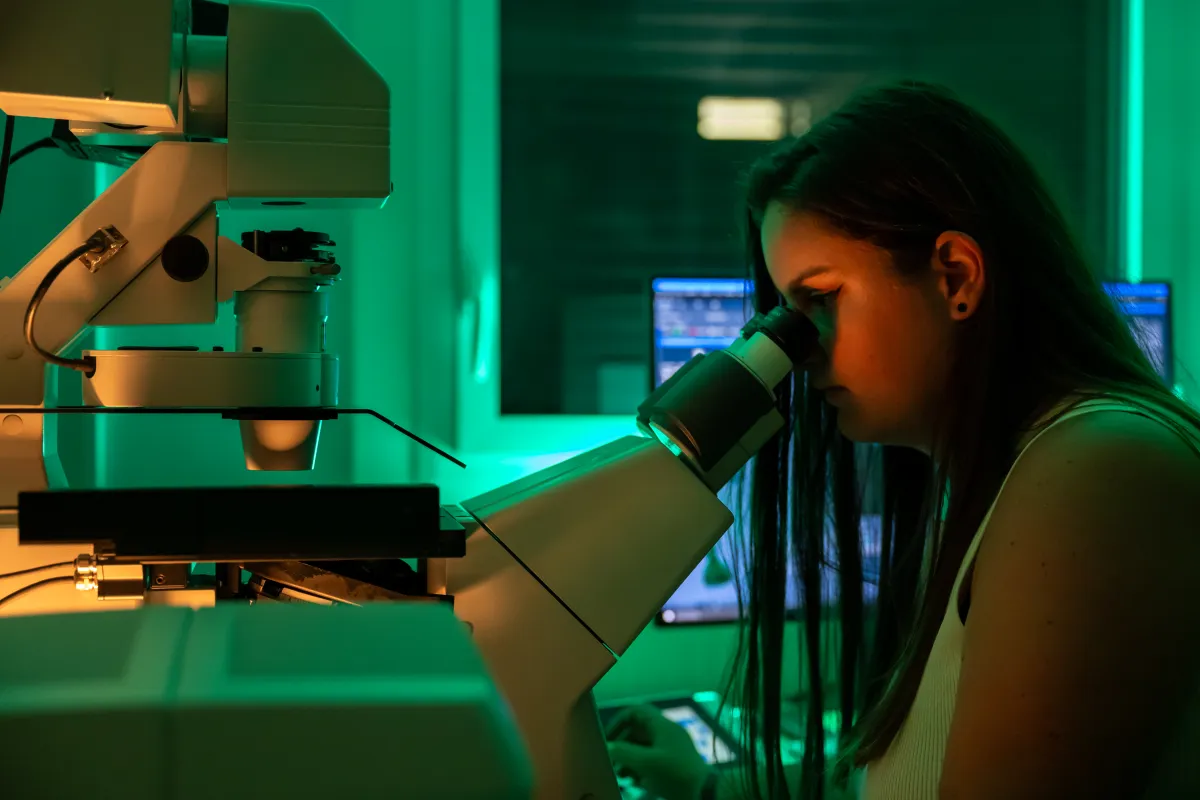
In Marie Delattre’s laboratory.
© Alexandre Darmon / Art In Research
Nematodes and their transposable elements
Marie Delattre and her team discovered that nematodes of the genus Mesorhabditis undergo programmed elimination of 30% of their DNA in their somatic cells. Because these worms are easy to handle in the laboratory, they offer a valuable model for exploring new avenues to understand the origin of this phenomenon.
In these nematodes, the eliminated DNA sequences contain large amounts of transposable elements, regarded as genomic “invaders” due to their ability to move around within it. This elimination may in fact promote their persistence : transposable elements are removed from somatic cells, where their activity could disrupt the functioning of the organism, but they remain in germ cells, which allows them to be passed on from one generation to the next.
Understanding the evolution of programmed DNA elimination
With the support of Impulscience, Marie Delattre and her team will study how programmed DNA elimination emerges and is maintained through the action of transposable elements. Using nematodes as models, they will conduct interdisciplinary research at the crossroads of population genetics, bioinformatics, molecular biology and evolutionary biology. Their work will aim to uncover the molecular mechanisms underlying this massive loss of DNA, as well as the advantage that transposable elements themselves gain from the phenomenon. The project should also help explain why such a spectacular mechanism as the programmed loss of part of the genome could arise and persist over the course of evolution in very distantly related species. In the long term, Marie Delattre could identify molecular machinery that might be used for genome engineering beyond nematodes.
Marie Delattre in a few words
After completing her PhD at the Jacques Monod Institute in Paris, followed by postdoctoral research at the Swiss Institute for Experimental Cancer Research in Lausanne, Marie Delattre joined the CNRS in 2006. She established her team at the Laboratoire de Biologie et de Modélisation de la Cellule in Lyon in 2009. There, she heads the “Unconventional modes of DNA maintenance and transmission” team. This team investigates the evolution of cellular processes using nematodes as a model organism. By analysing unconventional species, she identifies the cellular constraints underlying diversity between species.
Worth reading
Anaïs Bailles
Marine Laporte

Romain Koszul