Anaïs Bailles How do our cells build an organism amid the “noise”?
CNRS researcher at Institut de Biologie du Développement de Marseille.
2026 • Impulscience
How do billions of cells manage to organise themselves to form an organism, despite the constant variations to which they are subjected? Anaïs Bailles is seeking to understand how this biological “noise” – far from being a mere disturbance – helps to generate cellular diversity whilst enabling the emergence of precise and reproducible forms during development.
Can order arise from noise?
During development, an entire organism is built from a single cell. Cells derived from it share the same genes but rapidly differentiate into a wide variety of types. Their fate depends on the chemical signals to which they are exposed, and on the forces they experience as they change shape, move within the embryo or alter their environment. These chemical and mechanical signals vary over time and space – sometimes within a matter of seconds – and may differ between two neighbouring cells, constituting various sources of biological “noise”. Surprisingly, despite this noise, the developmental process remains stable.
-
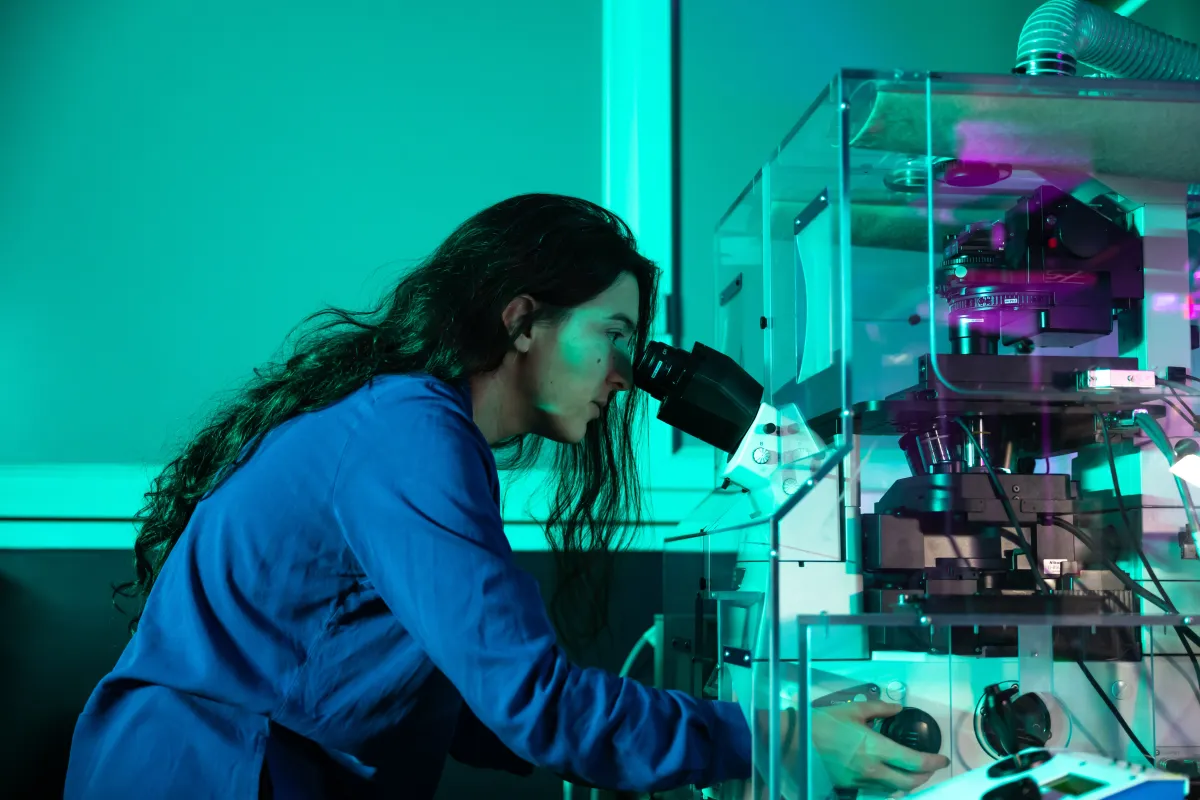
In Anaïs Bailles's laboratory.
© Alexandre Darmon / Art in Research -
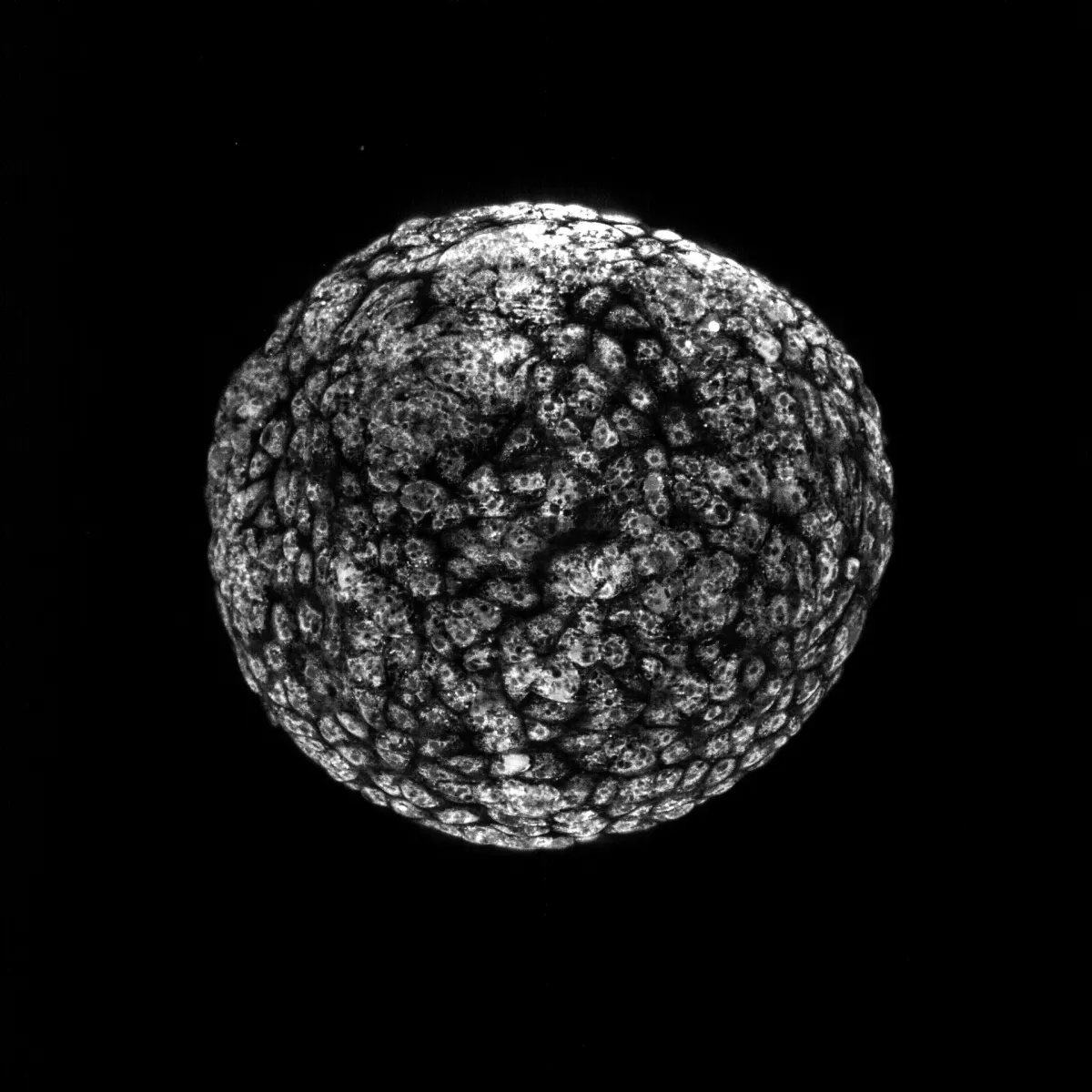
A cluster of hydra cells, the lipids of which are imaged using light-sheet microscopy.
© Anaïs Bailles Lab -
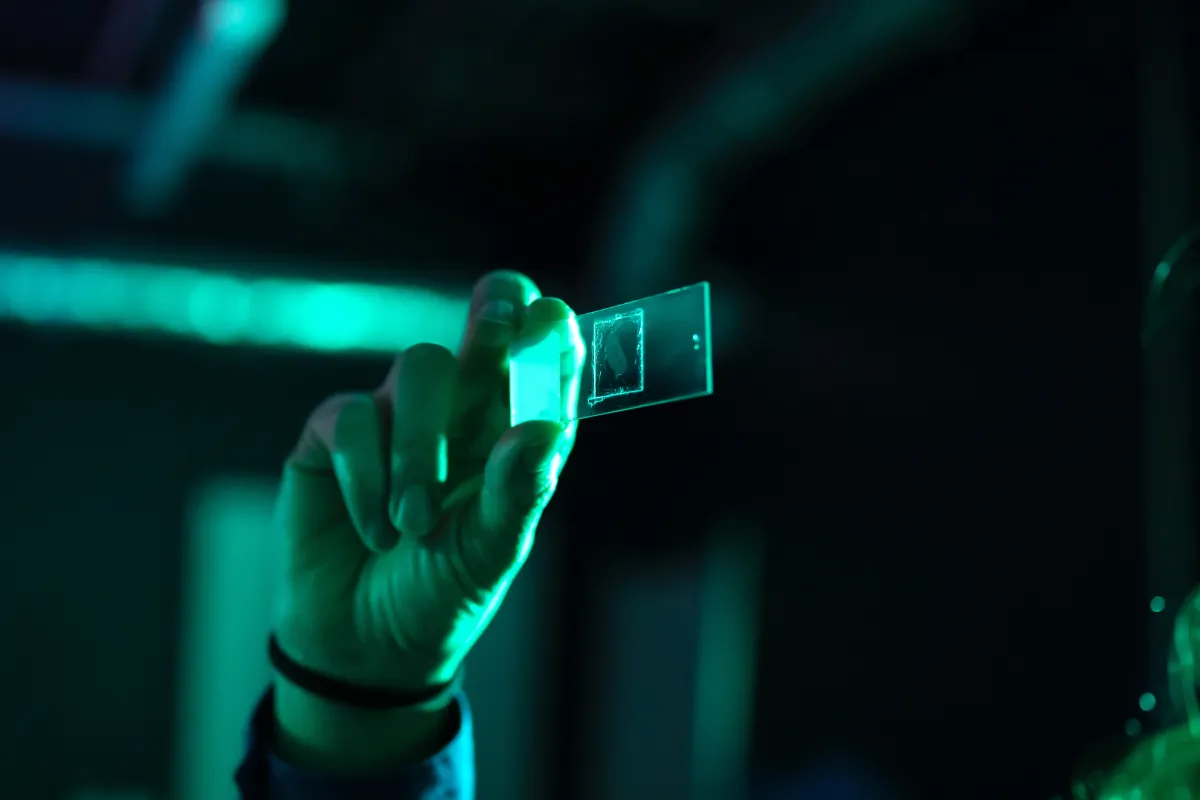
In Anaïs Bailles's laboratory.
© Alexandre Darmon / Art in Research -
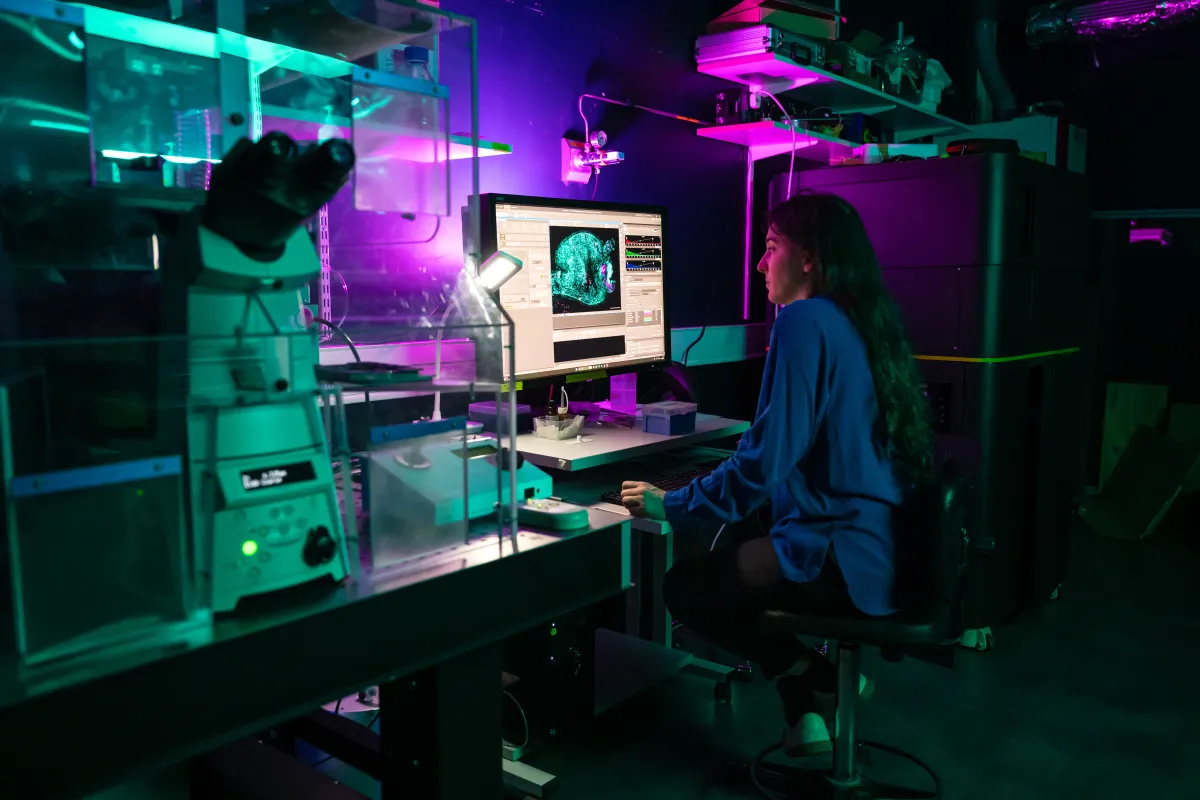
In Anaïs Bailles's laboratory.
© Alexandre Darmon / Art in Research -
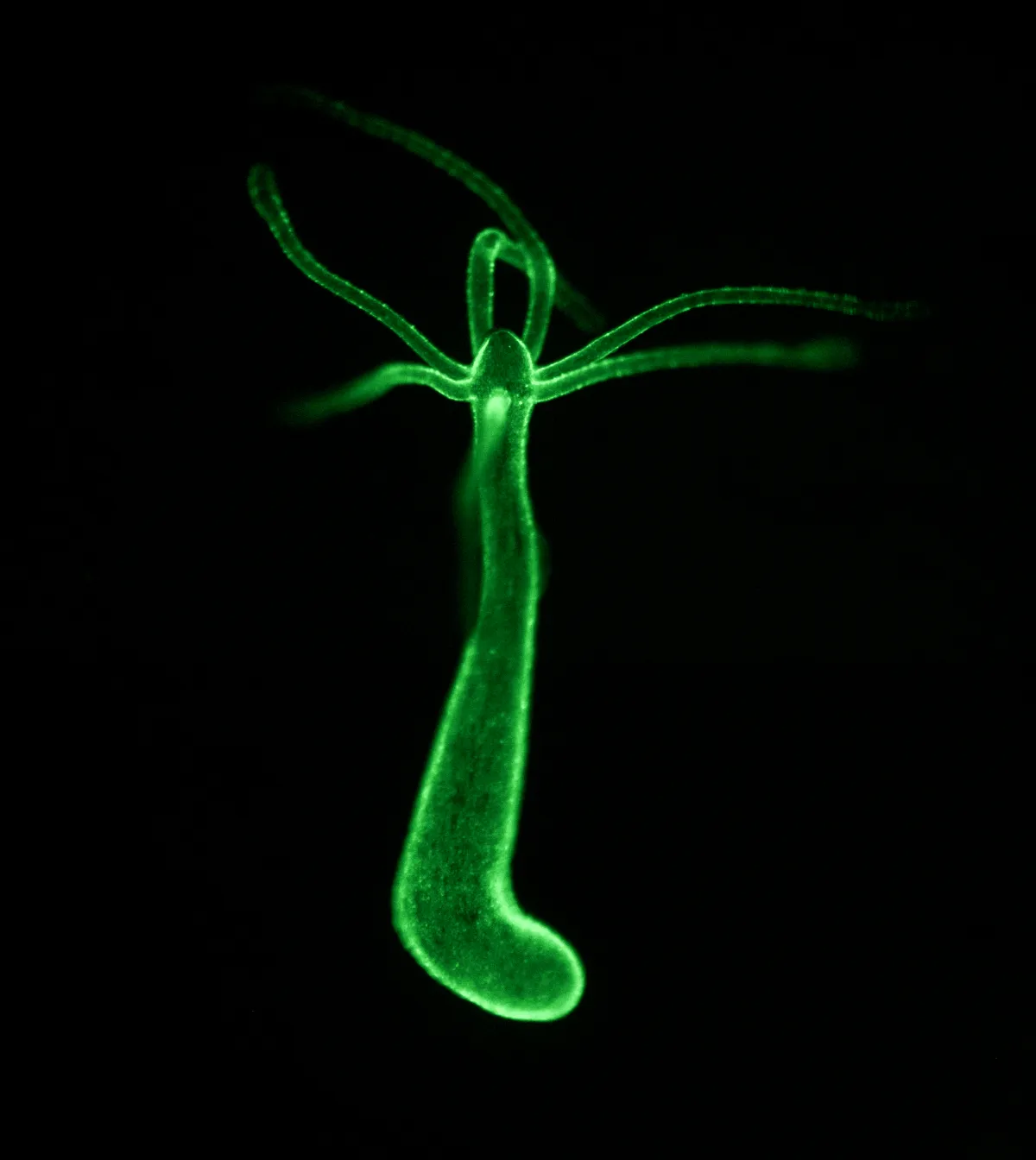
An adult hydra, in which actin, the main protein of the cellular skeleton, is imaged using epifluorescence microscopy.
© Anaïs Bailles Lab -
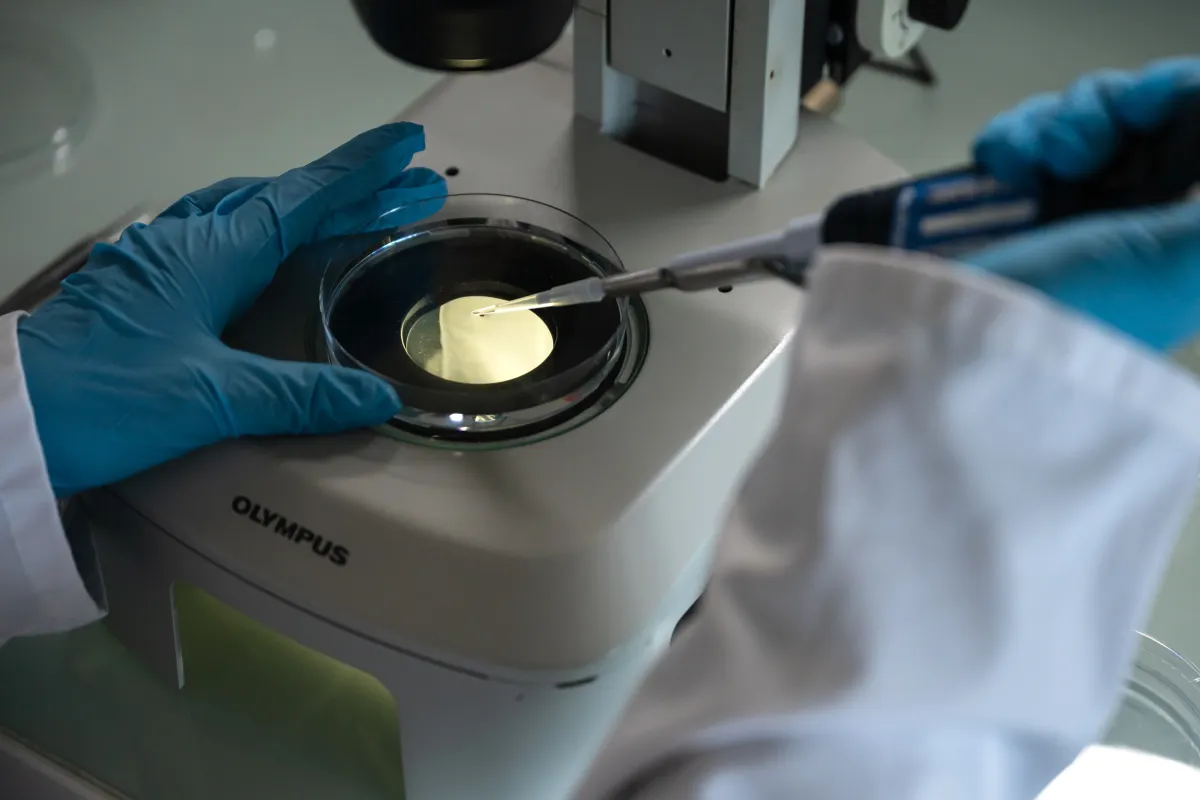
In Anaïs Bailles's laboratory.
© Alexandre Darmon / Art in Research -
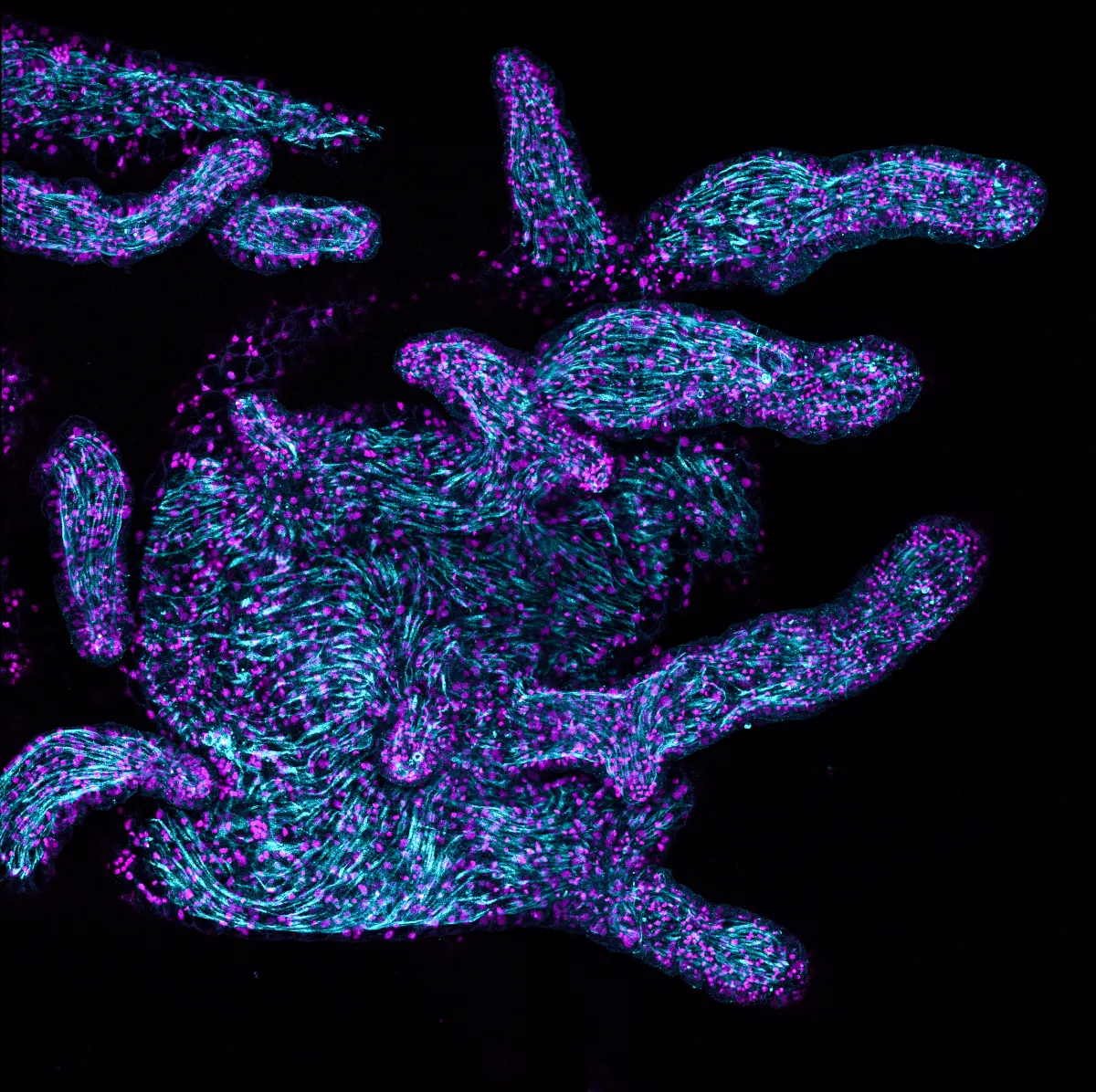
An adult hydra that has been chemically treated to increase the number of its heads. Actin forms a network of filaments (cyan). The cell nuclei are shown in magenta. The specimen was fixed and imaged using confocal microscopy.
© Anaïs Bailles Lab -
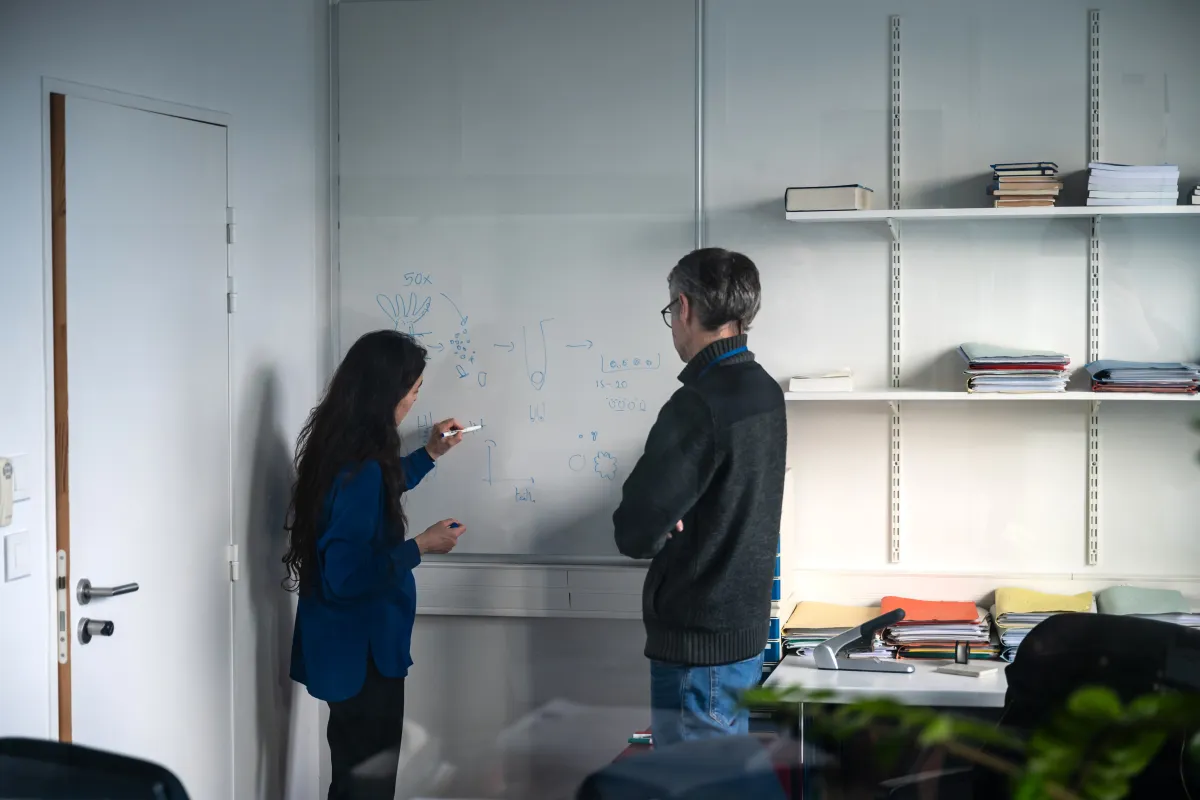
Anaïs Bailles and her team.
© Alexandre Darmon / Art in Research
Hydra, an astonishing model
Anaïs Bailles and her colleagues investigate how an organism integrates chemical and mechanical noise to generate cellular diversity, while maintaining reproducible patterns and shapes.
To study this phenomenon, they rely on the exceptional properties of the Hydra, an aquatic animal that has the ability to renew its cells and regenerate the various parts of its body. Even when it is completely dissociated into individual cells, Hydra manages to reorganise them and re-establish its body axes and shape. It is therefore described as a “self-organising” organism. Moreover, its gene expression is closely linked to the mechanical forces acting on its cells. This makes it an ideal model for studying chemical and mechanical noise and their effects on how organisms take shape.
From variation to biological organisation
With the support of Impulscience, Anaïs Bailles and her colleagues will develop new methods to quantify noise and its interactions in Hydra. Once these variations have been measured and characterised, the team will modify them experimentally to determine their role in tissue organisation. These experiments will feed into computer simulations of noise and its impact on development, with the aim of extending this concept to other types of organisms, such as mammals.
Beyond the Hydra model, this project could reveal fundamental principles explaining how cells, faced with a constantly changing environment, manage to organise themselves in a stable manner to form and maintain an organism.
Anaïs Bailles in a few words
Having studied physics at Paris-Saclay University, it was whilst undertaking her PhD at the Aix-Marseille University that Anaïs Bailles turned her attention to morphogenesis during the embryonic development of the fruit fly. As a postdoctoral researcher at the Max Planck Institute in Germany, she focused on the self-organisation of biological patterns in multicellular systems and developed the Hydra experimental model. In 2026, she joined the CNRS and the Institute of Developmental Biology in Marseille.
Worth reading
Frank Schnorrer
Marine Laporte
Dmitry Karpov