Romain Koszul Tailor-made chromatin to decode DNA organisation
Professeur and head of “Spatial Regulation of Genomes” team at Institut Pasteur, Paris. CNRS researcher. The Pasteur Institute’s website.
2026 • Impulscience
Unravelled, the DNA in each of our cells would measure nearly two meters. Yet it fits inside a microscopic nucleus thanks to its compaction into chromatin. More surprisingly still, this three-dimensional organization, far from random, influences the activity of our genes. By combining artificial intelligence and synthetic DNA, Romain Koszul aims to decipher the rules that govern this architecture and thus determine which regions of our genome are accessible and which remain silent.
Chromatin, the gatekeeper of DNA access
In the cell nucleus, DNA is compacted by wrapping around protein complexes to form nucleosomes, the basic units of chromatin. This organisation resembles a string of beads, with spacing that varies across different regions of the genome. This spacing affects the accessibility of DNA: some sequences can be read and used by the cell, while others remain inaccessible or “silent”.
-
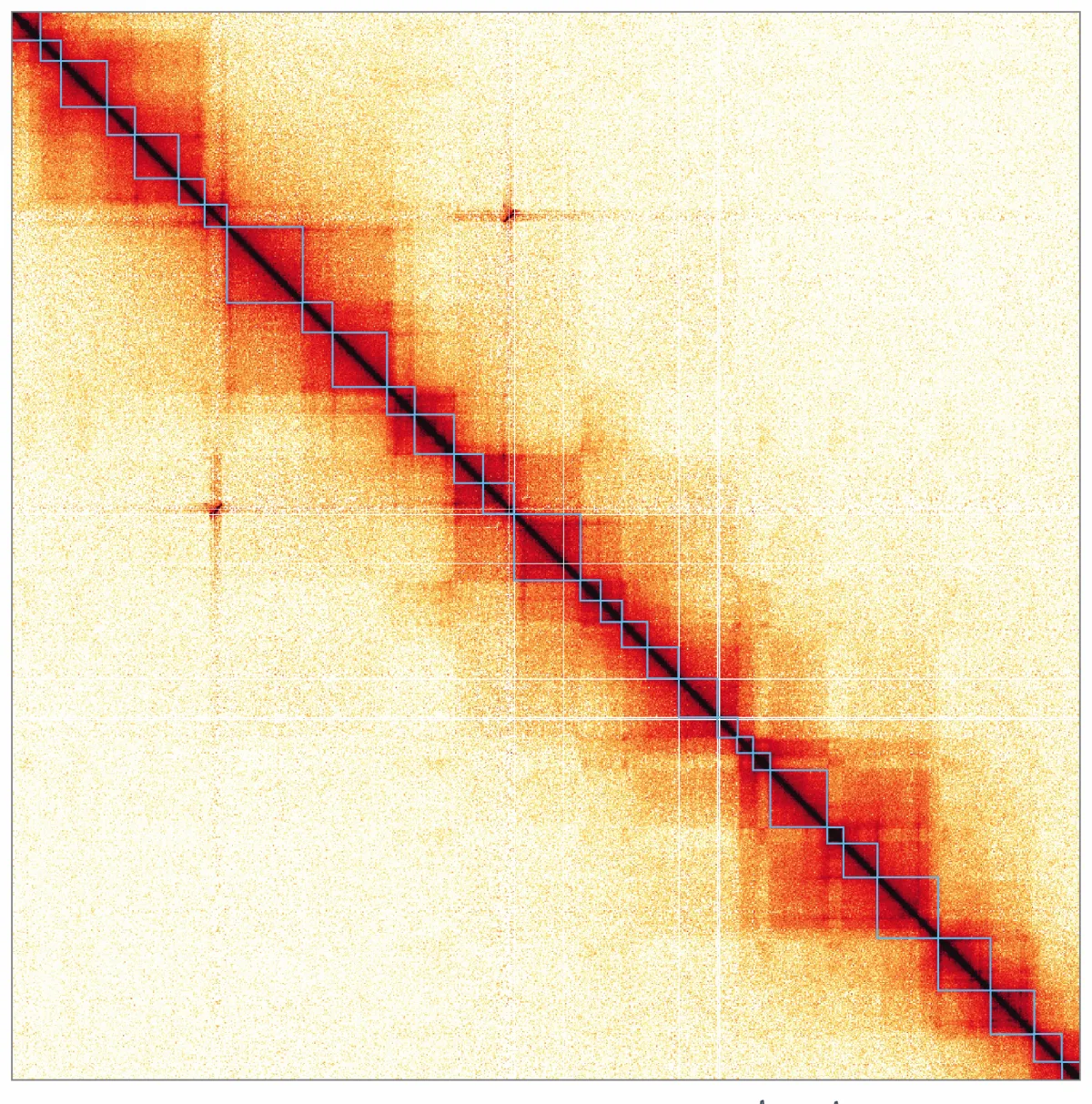
Intra-chromosomal interactions measured by Hi-C, revealing the hierarchical spatial organisation of chromosome 3 within mouse cells, from chromatin compartments to regulatory loops.
© Romain Koszul lab / Institut Pasteur -
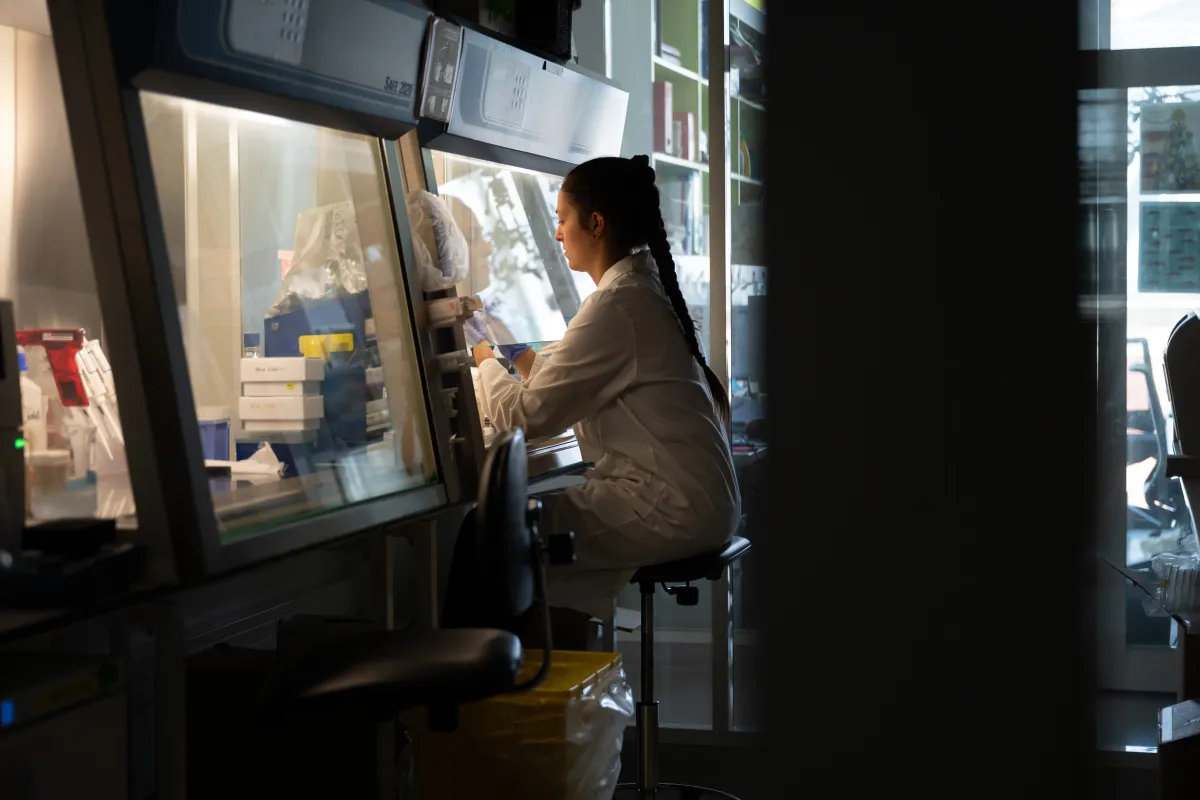
In Romain Koszul’s laboratory.
© Alexandre Darmon / Art In Research -
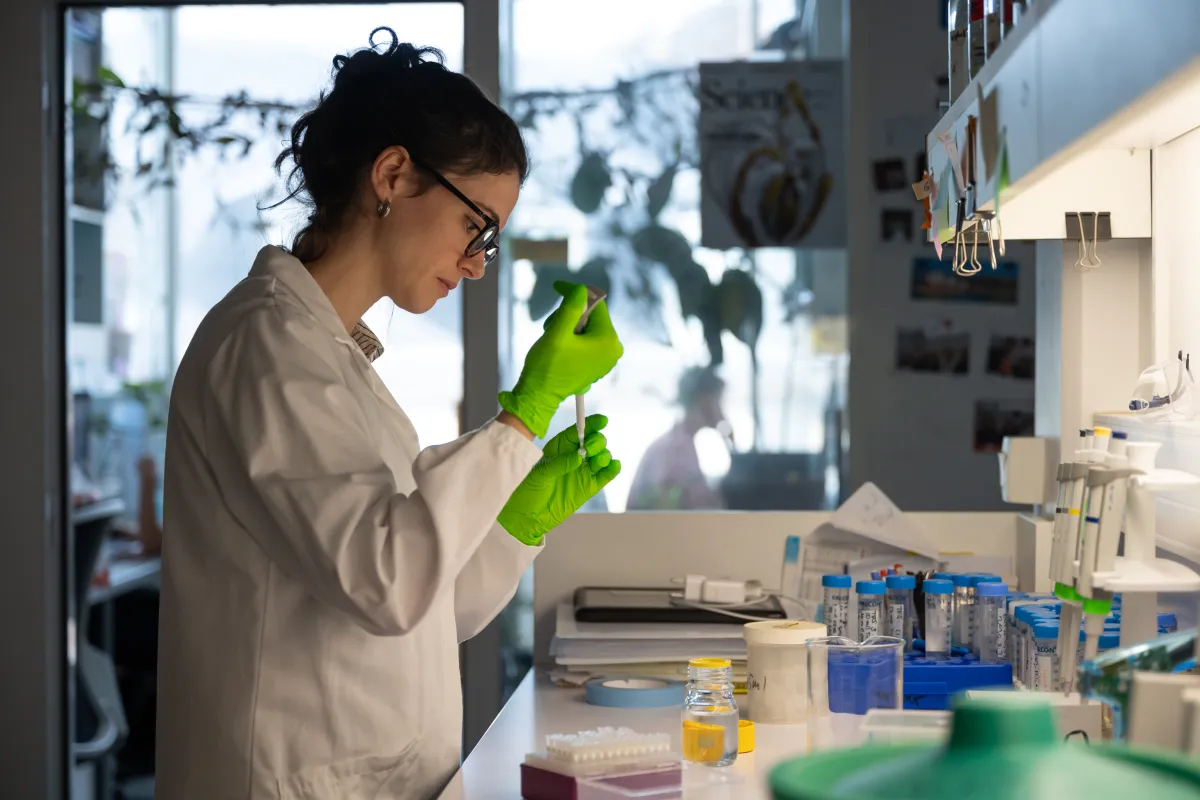
In Romain Koszul’s laboratory.
© Alexandre Darmon / Art In Research -
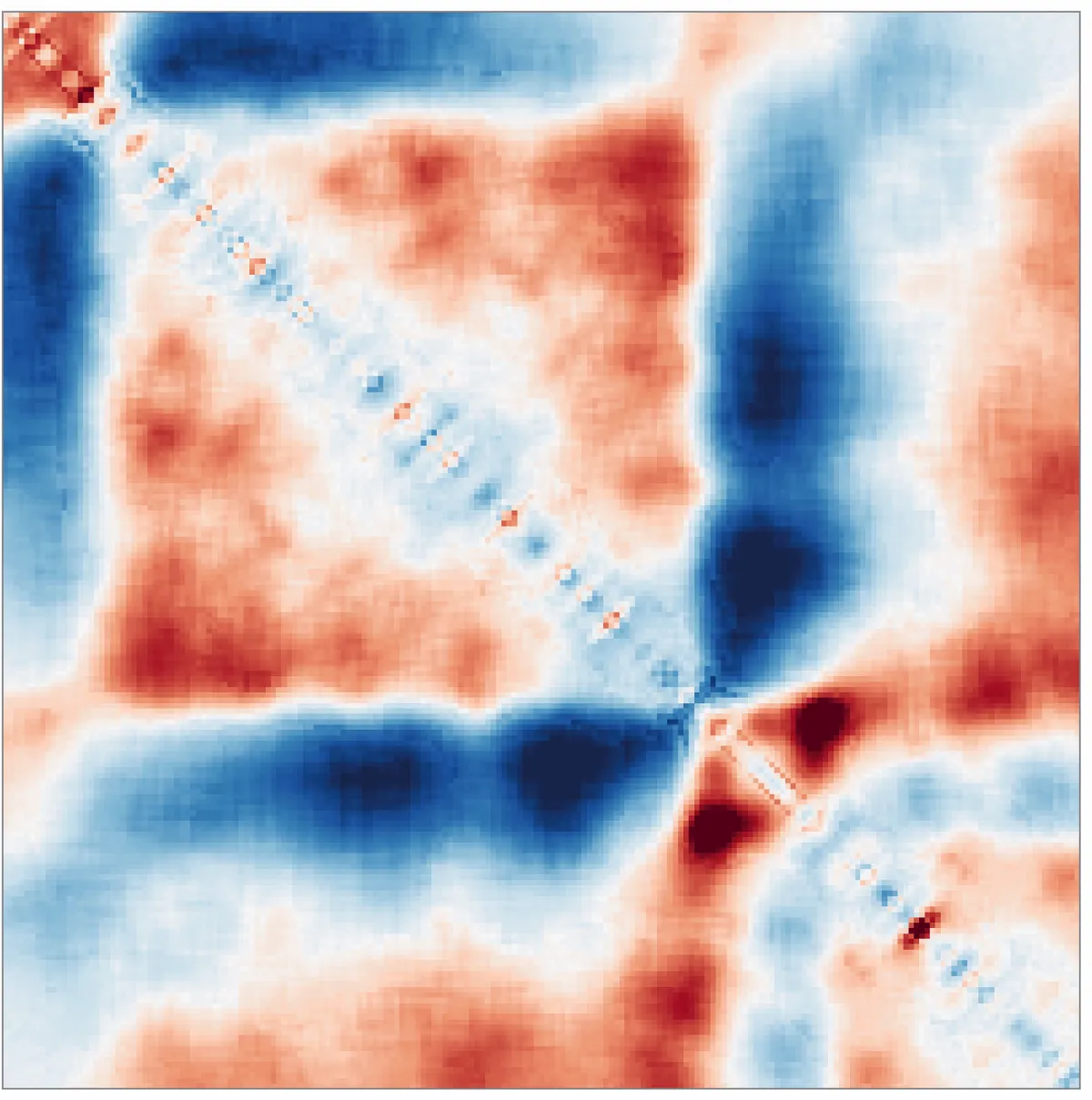
Intra-chromosomal interactions measured by Hi-C, revealing the hierarchical spatial organisation of chromosome 3 within mouse cells, from chromatin compartments to regulatory loops.
© Romain Koszul Lab / Institut Pasteur -
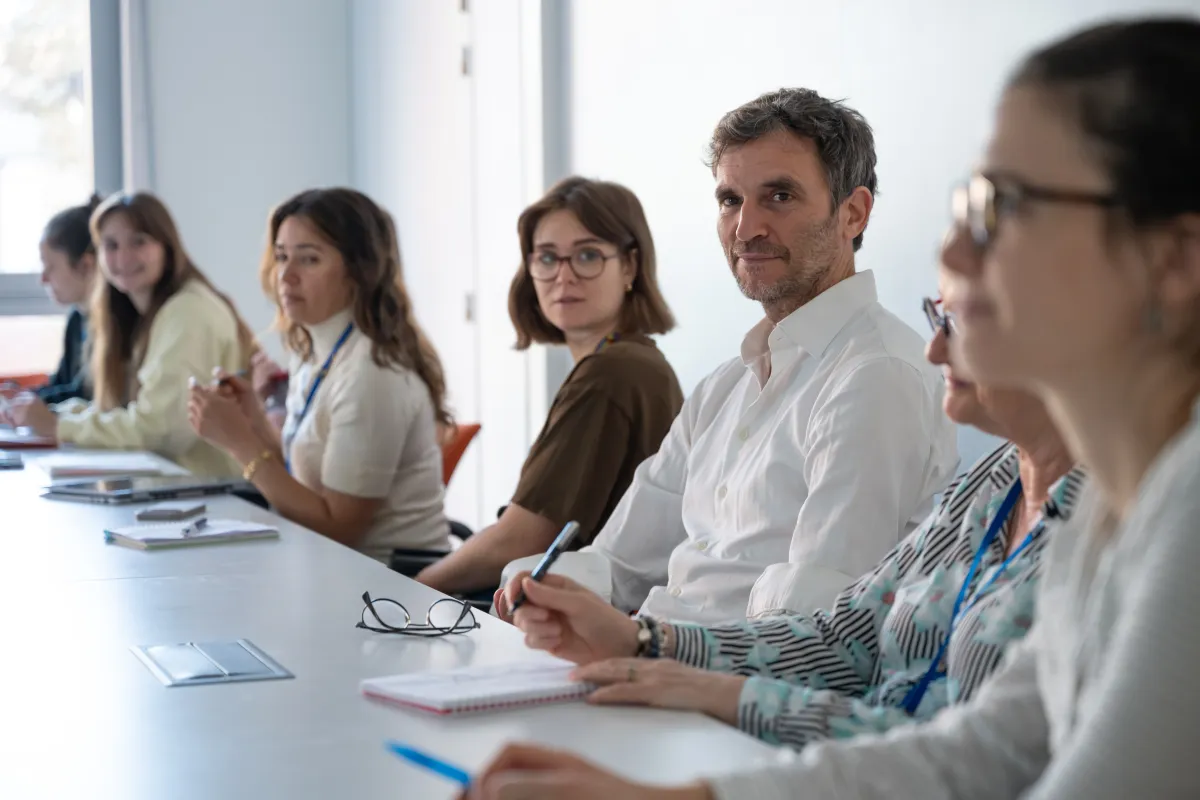
Romain Koszul and his team.
© Alexandre Darmon / Art In Research
Tailor-made chromatin
The spacing between nucleosomes along the DNA influences how chromatin is organised and compacted. Regions of the genome with similar spacing therefore tend to cluster together, but the reasons for this remain poorly understood. The role of this organisation in reading DNA is difficult to study, notably because chromatin forms complex, dynamic structures, particularly in the large genomes of animals.
With the support of Impulscience, Romain Koszul and the project team will develop synthetic chromatin segments with precisely controlled properties. To design them, they will draw on artificial intelligence models capable of predicting some of their characteristics from the DNA sequence. This approach will enable them, for example, to understand how the distance between nucleosomes influences the clustering of similar chromatin regions, and how this organisation affects the reading of the information contained in DNA.
From synthetic DNA to the living cell
By combining synthetic biology, genome editing and artificial intelligence, the team will assemble and study synthetic chromatin domains with “à la carte” properties: free of nucleosomes, with nucleosomes spaced more or less widely apart, or “silent”. By introducing these synthetic chromatin segments into yeast, the researchers will explore the rules that govern genome architecture and the formation of “silent” chromatin.
This work will help determine to what extent chromatin may represent a fundamental organising principle shared by all eukaryotes. It could also lead to new strategies for controlling the behaviour of synthetic chromatin segments for specific applications.
Romain Koszul in a few words
After completing a PhD in genetics and genomics at Université Pierre-et-Marie-Curie and postdoctoral research at Harvard University, Romain Koszul joined the CNRS in 2008. In 2011, he set up the “Spatial Regulation of Genomes” research team at the Institut Pasteur, where he is now a professor. An EMBO member since 2022, he received the Académie des sciences Medal in Molecular and Cellular Biology and Genomics in 2023, and a CNRS Silver Medal in 2026. His research aims to understand the principles governing chromosome organisation and its links with genome function, combining genetics, genomics, synthetic biology and computational approaches.
Worth reading
Dmitry Karpov
Marie Delattre
Marine Laporte