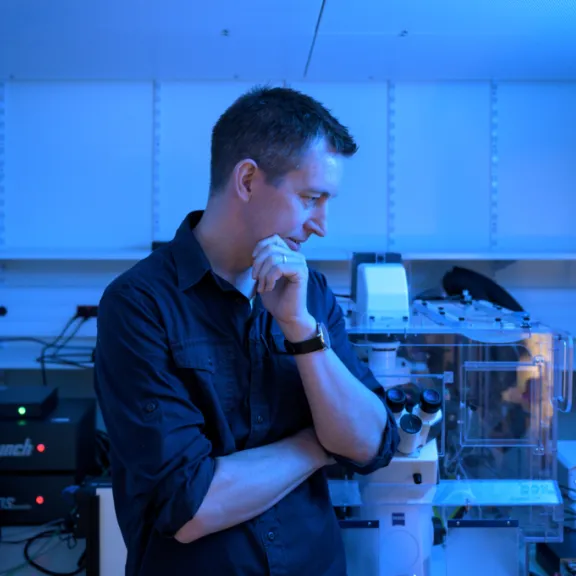
Mehdi Touat Understanding and combating glioblastoma resistance to treatment
Neuro-oncologist, lecturer and hospital practitioner at AP-HP and Sorbonne University, head of the "Brain tumour heterogeneity, immunity and therapy" group at the Institut du Cerveau, Paris.
- 2025 • ATIP-Avenir Program
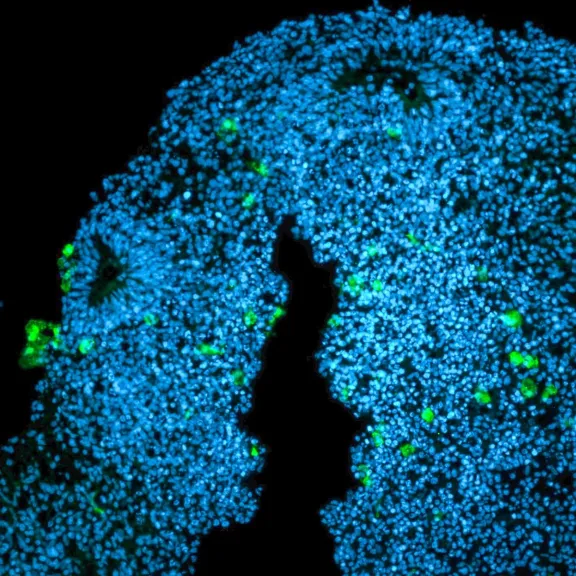
Glioblastoma is the most common malignant brain tumour and also one of the most aggressive. Despite advances in biology, current treatments are still unable to cure this disease. This is mainly due to the ability of tumour cells to rapidly develop resistance, which limits the effectiveness of therapies. Mehdi Touat is seeking to better understand these resistance mechanisms in order to pave the way for new therapeutic approaches.
Glioblastoma, a common and daunting cancer
In France, approximately 3,500 new cases of glioblastoma are diagnosed each year. It is the most common brain cancer in adults and also the most aggressive: two out of three patients die within two years of diagnosis. To date, the most commonly used treatments aim to damage the DNA of tumour cells, such as radiotherapy and certain chemotherapy agents from the DNA alkylating agent family, such as temozolomide and lomustine. However, one of the main reasons why it is difficult to cure these patients is that tumour cells rapidly develop resistance mechanisms, making these treatments less effective.
Tackling resistance
Mehdi Touat's project aims to elucidate the mechanisms of treatment resistance in order to pave the way for new therapeutic strategies. With his team, he is focusing on alkylating agents, whose effectiveness is limited by tumour resistance.
This project comprises three main objectives:
- Understanding how certain tumours repair DNA damage and survive despite treatment.
- Assessing whether alkylating agents can be combined with other treatments — such as epigenetic inhibitors or those targeting DNA repair — in order to enhance their efficacy.
- Studying the influence of the tumour environment, particularly immune system cells, on treatment resistance.
Towards new treatments for glioblastoma
By understanding why and how glioblastomas resist chemotherapy, Mehdi Touat hopes to identify biomarkers capable of predicting patient response to treatment, propose new, more effective therapeutic combinations, and identify novel mechanisms of resistance linked to the tumour environment.
Ultimately, this work aims to lead to the development of innovative clinical trials that could benefit not only patients with glioblastoma, but also those with other cancers treated with DNA-damaging agents.
Mehdi Touat in a few words
Mehdi Touat is a neurologist specialising in oncology. During his PhD work, between the Institut du Cerveau in Paris and the Dana-Farber Cancer Institute, Harvard Medical School in Boston, he focused on the link between the excessively high number of genetic mutations in glioblastoma cells and the acquisition of resistance to treatment. He joined the Institut du Cerveau in 2021 and, since 2025, has co-directed the ‘Brain tumor heterogeneity, immunity and therapy’ team at the same institute.
Worth reading
Meryem Baghdadi
Albert Tsai
Mathilde Guzzo