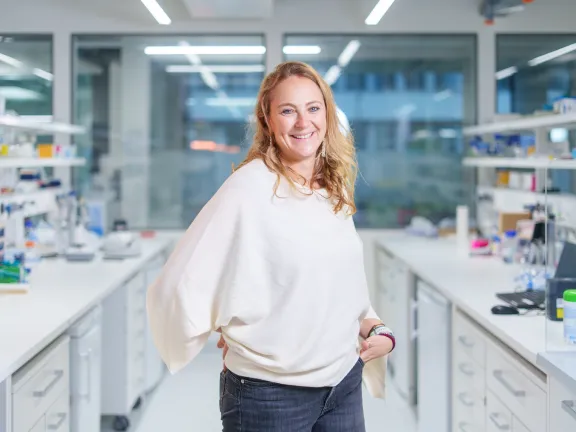
Prisca Liberali How do highly diverse cells manage to organise themselves to form tissues with precise and reproducible structures ?
Full Professor at Swiss Federal Institute of Technology Zurich (ETH Zurich) and senior group leader of the “Design principles of tissue organization” group at Friedrich Miescher Institute for Biomedical Research (FMI) in Basel, Switzerland. Prisca Liberali and her team’s website
2026 • Bettencourt prize for young researchers
How do complex tissues form from individual cells, each of which is different from the others? Prisca Liberali is helping to answer this fundamental question in biology by developing methods to measure, track and predict the behaviour of cells. Her work reveals the mechanisms that govern the formation, regeneration and maintenance of tissue size and shape.
How tissues organise themselves
Understanding the collective properties of multicellular systems – be it a tissue, an organ or an entire organism – is essential for elucidating fundamental biological processes, such as embryonic development or tissue regeneration.
Whilst each cell has its own individual characteristics, tissues nevertheless develop according to remarkably reproducible architectures. How can variability between cells give rise to order? How is this balance disrupted in the event of disease? Since setting up her team in 2015, these questions have been at the heart of Prisca Liberali’s research.
-
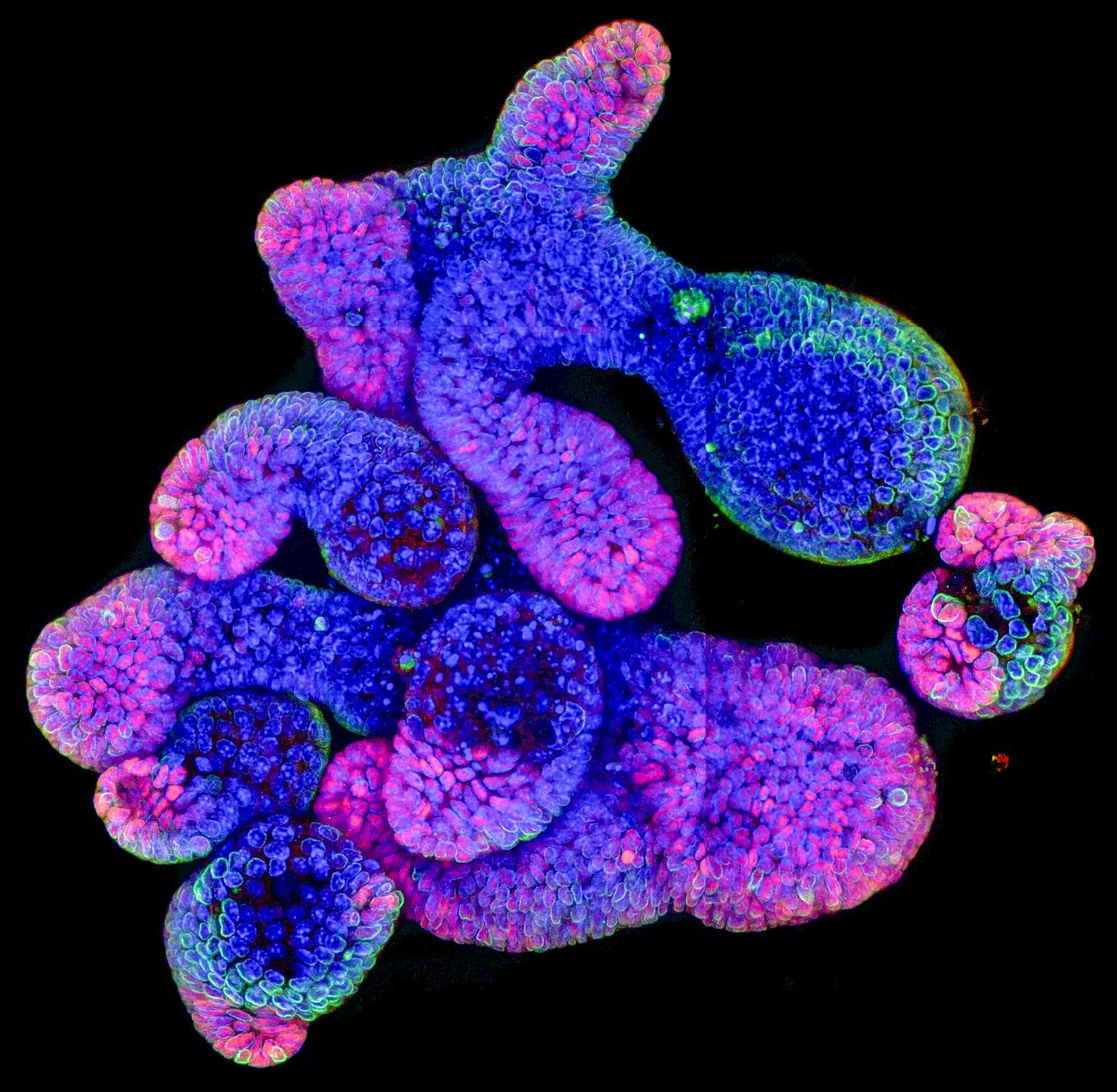
Mouse intestinal organoids, with cell nuclei labelled in blue, proliferating cells in red and differentiated enterocytes in green.
© Marius Mählen / Liberali Lab -

Prisca Liberali and her team.
© Alexandre Darmon / Art In Research -
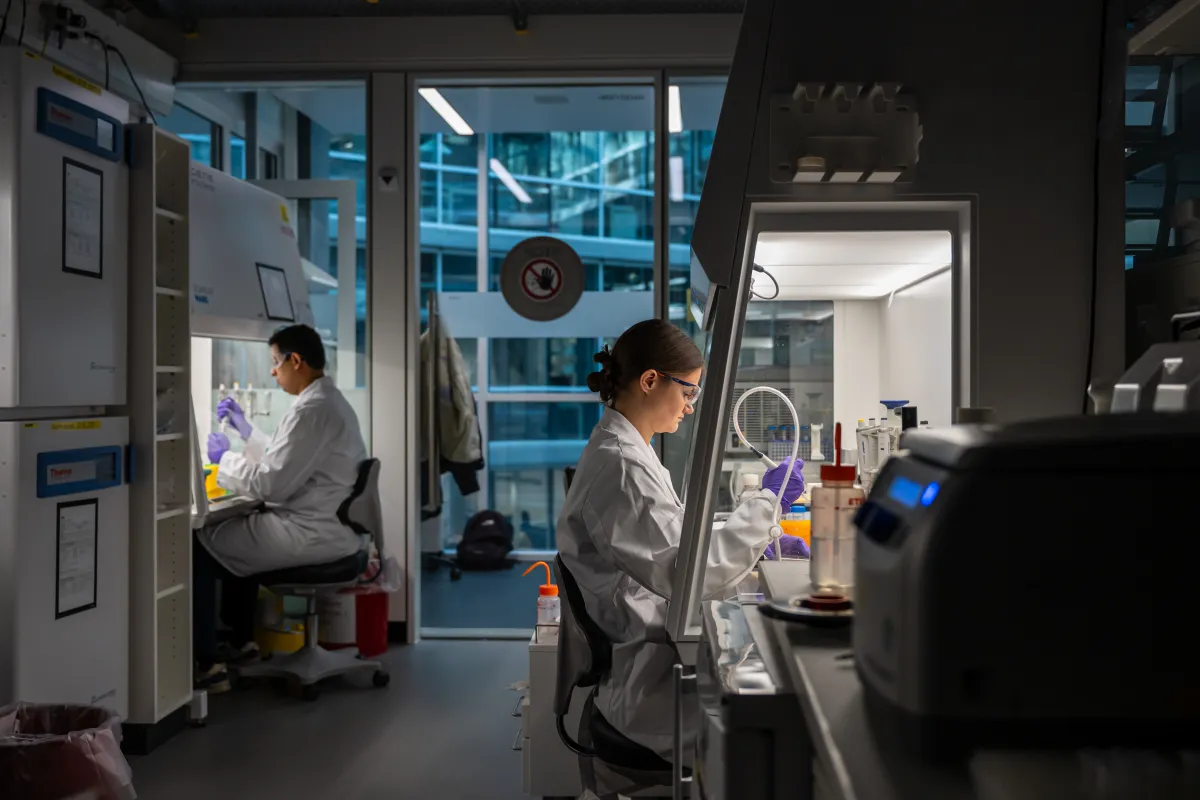
In Prisca Liberali’s laboratory.
© Alexandre Darmon / Art In Research -
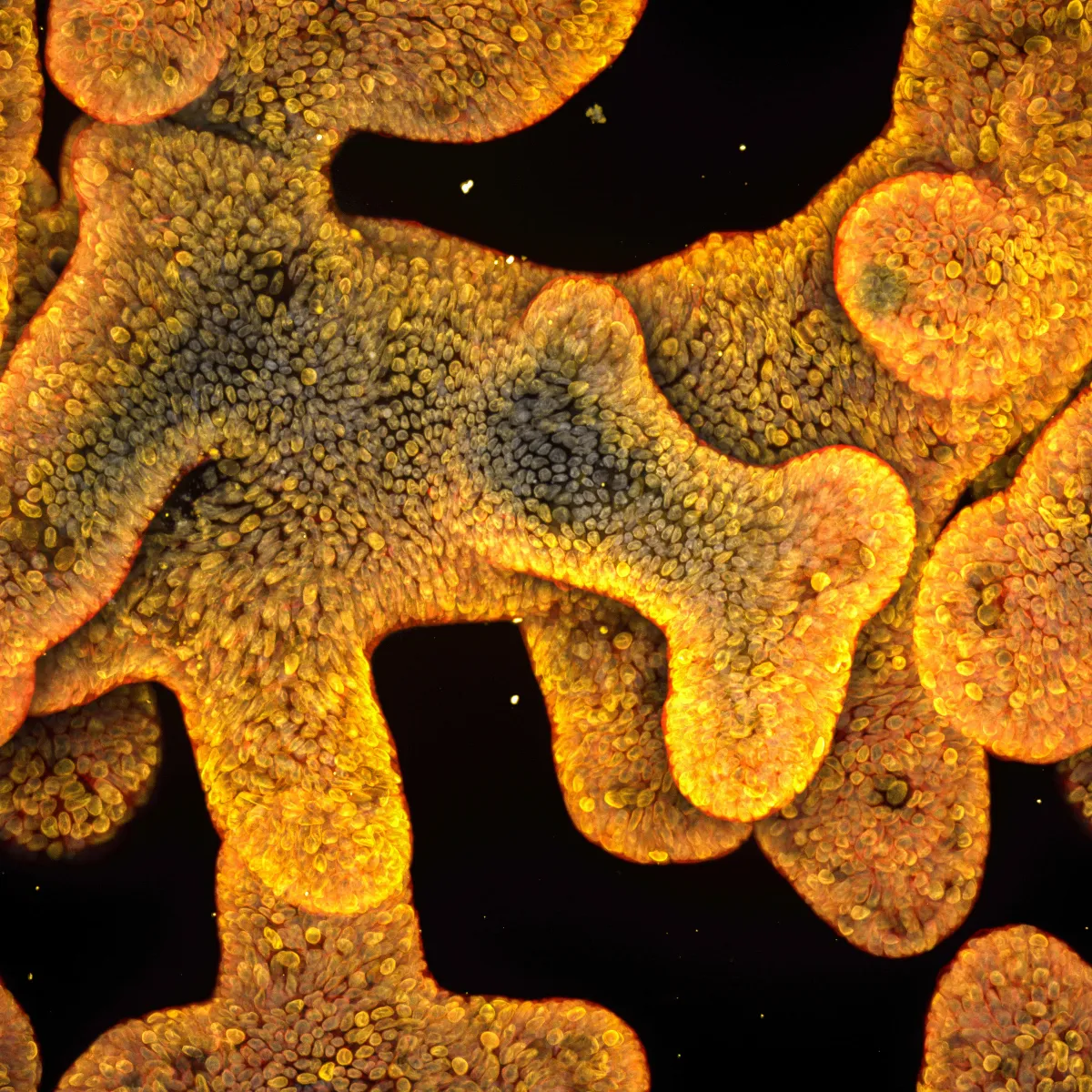
Human colon organoids, with the cell nuclei labelled in yellow and the cell membranes in red.
© Marius Mählen / Liberali Lab -
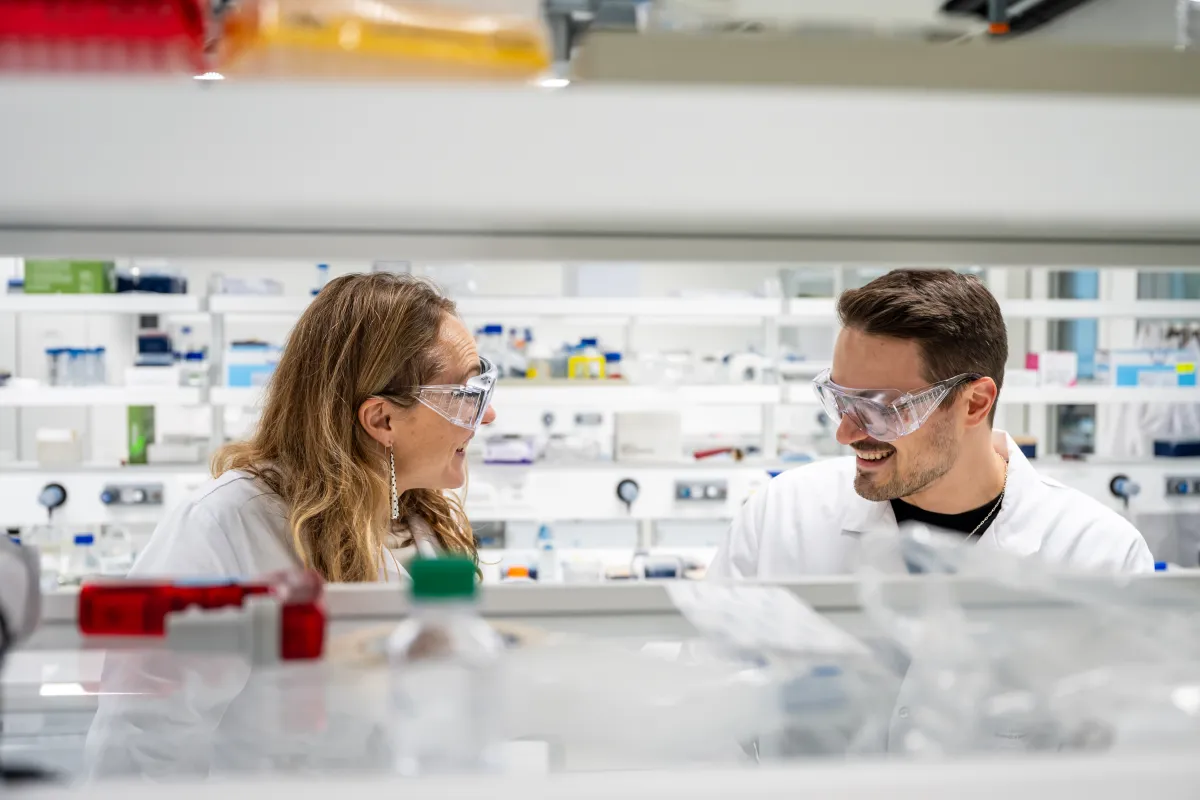
In Prisca Liberali’s laboratory.
© Alexandre Darmon / Art In Research -
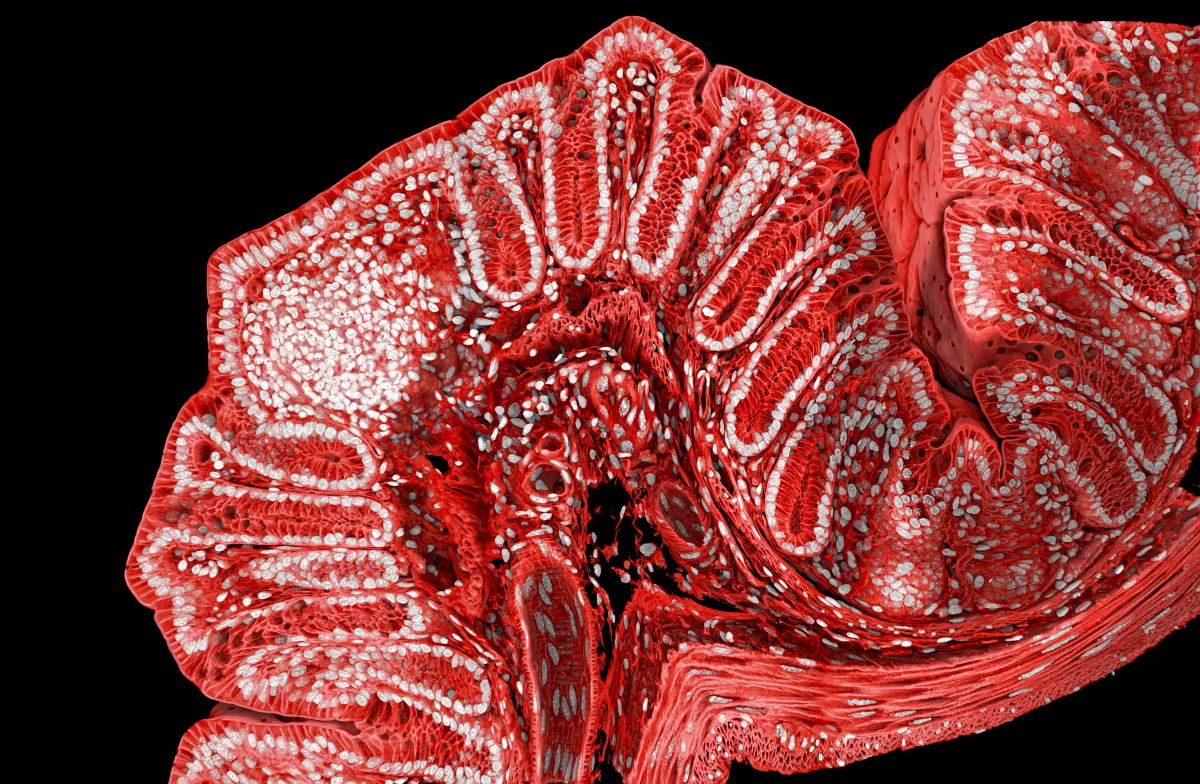
Mouse colon, with cell nuclei stained white and plasma membranes stained red.
© Marius Mählen / Liberali Lab
When cellular diversity creates order
Using intestinal organoids as a model system, Prisca Liberali showed that transient differences between cells can trigger the formation of organised structures. In other words, the “noise” that arises during tissue development or regeneration prepares cells to perceive and respond to mechanical, metabolic and biochemical signals from their environment. These different cellular states are then stabilised to form distinct cell types and a precise, reproducible tissue architecture.
Unravelling individual differences
This research also paves the way for a better understanding of differences between individuals. Prisca Liberali is now seeking to understand why regenerative capacity and susceptibility to disease vary from one person to another. Using patient-derived organoids, she and her team are studying the mechanisms involved in inflammatory bowel diseases and seeking to identify the factors that influence disease progression and response to treatment.
Deeply committed to sharing knowledge, Prisca Liberali devotes a significant part of her work to communicating science to the general public, to mentoring young researchers, and to promoting equality, diversity and inclusion in research.
Prisca Liberali in a few words
A chemist by training, Prisca Liberali obtained a PhD in biology at the Fondazione Mario Negri Sud in Italy. She carried out her postdoctoral research at ETH Zurich and the University of Zurich, where she developed quantitative approaches to study the behaviour of individual cells. In 2015, she established her research group at the Friedrich Miescher Institute for Biomedical Research in Basel, where she is now a group leader. Since 2024, she has been a full professor in the Department of Biosystems Science and Engineering at ETH Zurich in Basel.
Worth reading
Abdou Rachid Thiam
Andrea Ablasser
Raphaël Rodriguez